
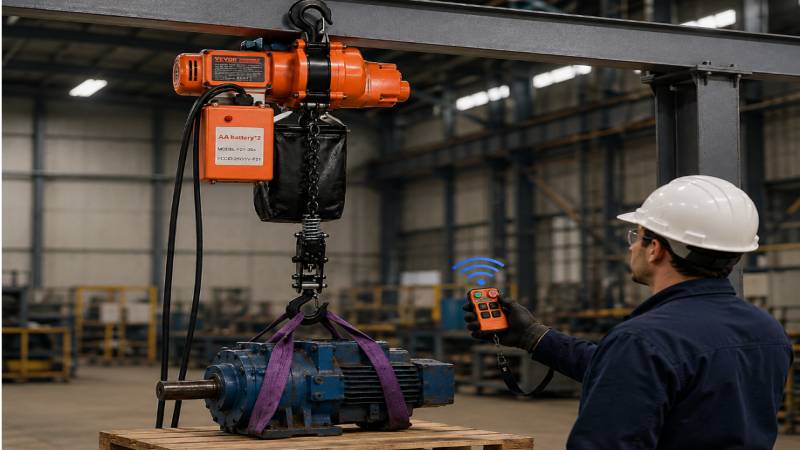
An electric hoist is an important lifting solution in workshops, warehouses, manufacturing facilities, construction sites, and other industrial environments. Because these machines regularly handle suspended loads, proper inspection and maintenance are essential for safe and reliable operation. Among all the components, the chain deserves particular attention because it is directly involved in lifting and lowering loads. Following a consistent maintenance routine can help reduce premature wear, improve reliability, and extend the service life of the equipment.
A well-maintained electric chain hoist can perform efficiently for years when operators follow the manufacturer’s instructions and conduct regular inspections. Chain maintenance should not be treated as an occasional task performed only when a problem becomes visible. Instead, it should form part of a planned maintenance program that includes cleaning, lubrication, inspection, and timely replacement of worn components.
Why Chain Maintenance Matters
The lifting chain experiences repeated movement and mechanical stress every time a load is raised or lowered. Over time, exposure to dust, moisture, dirt, chemicals, and heavy workloads can contribute to wear and corrosion.
Neglecting maintenance may lead to stiff chain movement, unusual noise, accelerated component wear, or other performance issues. More importantly, damaged lifting components can create serious safety risks. For this reason, operators should never continue using a hoist when a chain or related component appears damaged or does not meet the manufacturer’s inspection requirements.
Regular maintenance provides several benefits:
- Helps identify wear before it becomes more serious
- Supports smoother lifting and lowering
- Reduces unnecessary component wear
- Helps maintain reliable operation
- Can extend equipment service life
- Supports workplace safety procedures
1. Follow the Manufacturer’s Maintenance Schedule
Every hoist has specific requirements based on its design, capacity, operating environment, and intended application. The manufacturer’s manual should therefore be the primary reference for maintenance intervals and procedures.
Some equipment may require more frequent inspections when used continuously, exposed to harsh environments, or operated near maximum rated capacity. A maintenance schedule should take the actual operating conditions into account rather than relying solely on a general calendar.
Keep records of inspections, lubrication, repairs, and component replacements. Maintenance documentation can make it easier to identify recurring problems and determine when professional servicing is required.
2. Inspect the Chain Before Use
A visual inspection should be performed before operating lifting equipment. Look carefully along the accessible length of the chain and check for obvious signs of damage or abnormal wear.
Important things to look for include:
- Deformed or stretched links
- Cracks or visible damage
- Excessive wear
- Corrosion or rust
- Bent links
- Unusual discoloration
- Foreign material trapped between links
- Poor movement through the chain guide
The chain should also move properly through the hoist mechanism. If it appears to bind, jump, or behave differently from normal, stop operation and have the equipment inspected by a qualified person.
3. Keep the Chain Clean
Dirt and debris can accumulate on a lifting chain, especially in workshops, construction environments, and outdoor applications. Contamination can interfere with smooth chain movement and contribute to accelerated wear.
Clean the chain according to the equipment manufacturer’s instructions. Use an appropriate cleaning method that does not damage the chain’s surface or remove necessary lubrication.
Avoid using unsuitable chemicals simply because they appear effective at removing dirt. Certain solvents or cleaning agents can damage components or create other maintenance problems.
After cleaning, inspect the chain again for damage that may have been hidden beneath accumulated dirt.
4. Apply the Correct Lubrication
Proper lubrication is one of the most important aspects of electric chain hoist maintenance. Lubrication helps reduce friction between moving components and supports smoother operation.
However, using too much lubricant or choosing an unsuitable product can also create problems. Excess lubricant can attract dust and debris, creating an abrasive mixture around moving parts.
Always use the lubricant recommended by the manufacturer and follow the specified application procedure. Apply it consistently rather than waiting until the chain becomes noticeably dry or noisy.
The lubrication frequency should reflect operating conditions. A hoist used frequently in a dusty or demanding environment may require more attention than equipment used occasionally in a clean indoor facility.
5. Check for Corrosion
Moisture and chemicals can cause corrosion, which may compromise the condition of metal components over time. Chains used outdoors or in humid industrial environments may require particularly careful inspection.
Look for areas showing discoloration, pitting, flaking, or other signs of corrosion. Surface contamination should be addressed according to the manufacturer’s maintenance instructions.
If corrosion appears significant or affects the structural condition of the chain, do not attempt to restore the chain simply by cleaning it. A qualified technician should determine whether the component remains suitable for service.
6. Avoid Overloading the Hoist
Even excellent maintenance cannot compensate for repeated overloading. The hoist should always be operated within its rated capacity and according to the manufacturer’s instructions.
Overloading places additional stress on the chain, hook, brake, gearbox, motor, and other components. Repeated overload conditions can accelerate wear and potentially cause equipment failure.
Operators should know the weight of the load before lifting and make sure the load is properly positioned and secured. Never use a hoist as a substitute for equipment designed to handle loads beyond its rated capacity.
7. Inspect the Chain Guide and Related Components
Chain maintenance should not focus exclusively on the chain itself. The chain guide, sprocket, hook, brake, limit mechanisms, and other associated components also affect lifting performance.
A damaged or improperly functioning chain guide can cause abnormal movement and accelerate chain wear. Similarly, problems with the hook or lifting mechanism can affect how loads are supported.
During scheduled inspections, examine the complete lifting system rather than treating individual components in isolation.
8. Listen for Changes During Operation
Operators can often identify developing problems by paying attention to changes in normal operating sounds and movement.
Unusual clicking, grinding, scraping, jerking, vibration, or inconsistent movement may indicate a mechanical problem. These symptoms should not be ignored simply because the hoist continues to lift.
If the equipment behaves differently from normal, stop using it and follow the appropriate inspection procedure. Continuing to operate questionable equipment can make a relatively minor problem more difficult and expensive to correct.
9. Inspect the Chain Under Suitable Conditions
A detailed inspection may require cleaning the chain first so that individual links can be examined properly. Depending on the equipment and workplace requirements, measurements may also be necessary to determine whether wear has exceeded acceptable limits.
Never rely solely on appearance when determining whether a chain is suitable for continued service. Follow the manufacturer’s rejection criteria and applicable workplace safety standards.
If you are unsure whether a chain is safe to use, have it evaluated by a qualified professional rather than making an assumption.
10. Choose Equipment Appropriate for the Application
Preventive maintenance begins before the hoist is installed. Selecting equipment that matches the workload and operating environment can reduce unnecessary stress.
For demanding industrial applications, a heavy-duty electric chain hoist may be appropriate when its specifications match the required lifting capacity and duty cycle. The correct selection should consider load requirements, lifting frequency, available power, lifting height, operating environment, and manufacturer specifications.
Choosing equipment based solely on maximum capacity or price can result in an unsuitable system. Proper application matching helps ensure that the hoist operates within its intended design parameters.
11. Train Operators Properly
Even a well-maintained hoist can be damaged through improper operation. Operators should understand the equipment’s controls, rated capacity, inspection procedures, and operating limitations.
Training should cover safe lifting practices, pre-use inspections, recognizing abnormal operation, and procedures for reporting defects.
Operators should never attempt repairs beyond their training or authorization. Mechanical adjustments and component replacement should be performed by appropriately qualified personnel.
12. Replace Worn Components Promptly
Maintenance is not simply about cleaning and lubrication. Components that reach the manufacturer’s wear or damage limits need to be replaced.
Do not attempt to repair a damaged lifting chain through makeshift methods such as welding, bending, or replacing individual links unless a procedure specifically approved by the manufacturer allows it.
Use appropriate replacement components that meet the equipment specifications. Improper parts can affect the hoist’s performance and compromise the integrity of the lifting system.
13. Keep a Maintenance Record
A maintenance log is a simple but effective way to manage lifting equipment. Record inspections, lubrication, repairs, unusual findings, and component replacements.
A good maintenance record can help answer important questions such as:
- When was the chain last inspected?
- When was it lubricated?
- Have unusual operating conditions been reported?
- Which components have previously been replaced?
- Is wear occurring faster than expected?
These records can also help maintenance personnel identify trends and schedule professional inspections before problems become urgent.
14. Know When Professional Inspection Is Required
Routine operator checks are important, but they do not replace qualified inspections where required by the manufacturer, workplace procedures, or applicable regulations.
Professional inspection may be necessary when a hoist has experienced an overload, unusual impact, prolonged inactivity, suspected damage, or repeated operational problems.
If there is any doubt about the condition of the chain or lifting mechanism, remove the equipment from service until it has been properly evaluated.
Conclusion
Long-term hoist performance depends on consistent maintenance rather than occasional repairs. Regular inspection, appropriate cleaning, correct lubrication, corrosion control, proper loading practices, and timely replacement of worn components all contribute to dependable operation.
An electric chain hoist should always be operated within its rated specifications and maintained according to the manufacturer’s instructions. Operators should also pay attention to unusual sounds, movement, or visible changes and report problems immediately.
Most importantly, electric chain hoist maintenance should be treated as part of a broader safety program. By combining routine checks with professional inspections, proper operator training, accurate maintenance records, and suitable replacement components, businesses can help keep lifting equipment reliable and ready for demanding work. See more.