
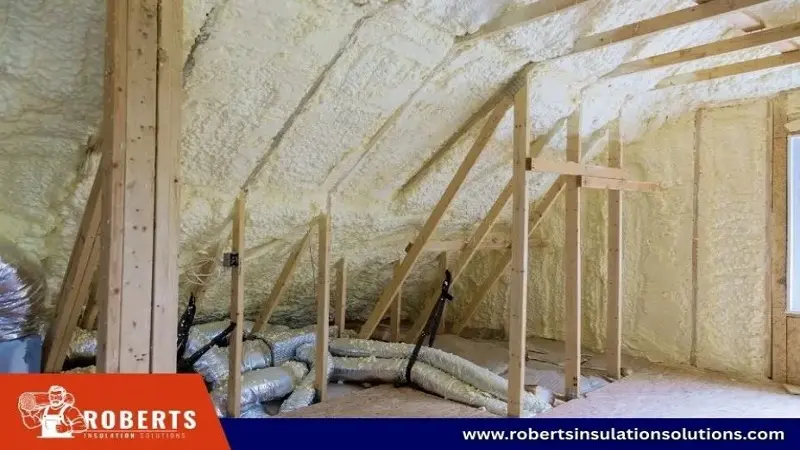
Attic insulation is a structural thermal barrier that restricts heat transfer between the interior of a home and the outside environment. This protective layer maintains a consistent indoor climate and reduces the workload on heating and cooling systems. By stabilizing indoor temperatures year-round, proper coverage serves as the most practical way to lower monthly energy consumption.
To understand why this barrier is necessary, you must look at how heat moves. Heat naturally flows from warmer areas to colder ones. During winter, the heat generated by your furnace tries to escape through the ceiling into the cold attic. In the summer, the intense heat collected by your roof pushes down into your air-conditioned living spaces. A properly installed thermal layer interrupts this constant movement.
This interruption primarily targets three types of heat transfer:
- Conduction: Heat moving directly through solid materials, such as ceiling joists and drywall.
- Convection: The natural process where warm air rises and cool air sinks within a space.
- Radiation: Heat traveling in a straight line to warm any solid object in its path, much like the sun heating a roof.
Identifying Signs of Failing Thermal Protection
Many older homes lack adequate defense against modern temperature extremes. Insulation materials settle, compress, or degrade over time. Identifying these deficiencies early prevents high utility bills and excessive wear on HVAC equipment.
Here are the primary indicators that a home needs a thermal assessment:
- Fluctuating Room Temperatures: Certain rooms feel drafty in the winter or unusually hot in the summer compared to the rest of the house.
- Rising Utility Bills: A steady, unexplained increase in heating and cooling costs over consecutive seasons.
- Ice Dams on the Roof: In colder climates, heat escaping into the attic melts roof snow. This water refreezes at the gutters, creating damaging ice blocks.
- Overworked HVAC Systems: The furnace or air conditioner runs constantly but struggles to reach the thermostat setting.
- Drafts and Moisture: Noticeable air movement near light fixtures or signs of condensation on the ceiling.
Understanding R-Value and Climate Requirements
The effectiveness of any thermal barrier is measured by its R-value. The “R” stands for resistance. This number measures how strongly a given material resists the conductive flow of heat. A higher R-value indicates superior climate control performance.
The necessary R-value for a home depends entirely on geographic location. Homes in warm, southern climates typically require an attic R-value between R-30 and R-49. In contrast, homes in cold, northern climates often need an R-value of R-49 to R-60 to adequately retain indoor heat.
Adding more material increases the total R-value, but the returns diminish after a certain point. Hitting the specific target for your climate zone ensures you achieve the most efficient temperature control without wasting money on unnecessary materials.
Examining Common Material Types
Contractors use several different materials to achieve the required R-value. Each material interacts with heat and moisture differently. The right choice depends on the structure of the space, the local climate, and the available budget.
Fiberglass Batts and Rolls
Fiberglass is a widely used material composed of extremely fine glass fibers. It usually comes in large, blanket-like rolls or pre-cut panels called batts. This material is widely available and relatively easy to handle. However, it requires precise cutting to fit tightly around pipes, wires, and framing. If gaps are left behind, heat easily bypasses the material.
Blown-In Cellulose
Cellulose is made from recycled paper products treated with non-toxic chemicals to resist fire, moisture, and pests. Installers use a specialized machine to blow the loose fibers into the space. This method effectively covers irregular surfaces and fills tiny gaps between joists. Because it settles over time, contractors must blow in slightly more material than initially needed to maintain the target R-value.
Spray Polyurethane Foam
Spray foam is a liquid chemical mixture that expands and hardens upon contact with a surface. It serves two functions simultaneously: it provides a high R-value and creates an airtight seal against drafts. Closed-cell spray foam is dense and resists water, making it highly durable. While it offers superior performance, it is generally the most expensive option and requires professional handling.
The Financial and Environmental Returns
Investing in proper thermal boundaries provides measurable benefits. The most immediate impact is financial. By stopping heat transfer, homeowners use less electricity and natural gas to maintain comfort. Over time, these monthly savings offset the initial cost of the installation.
Lowering energy consumption also benefits the environment. Homes that require less energy draw less power from local grids. This reduces the overall carbon footprint associated with residential living. Upgrading these defenses is a practical step toward sustainable homeownership.
Furthermore, a well-protected house maintains better indoor air quality. By properly sealing the upper barrier, you prevent dust, allergens, and outdoor pollutants from drifting down through the ceiling. This creates a cleaner, safer environment for families managing respiratory sensitivities.
Strategic Steps for Improving Your Home
If you suspect your home lacks adequate overhead protection, the first step is an objective visual evaluation. Homeowners can safely perform a quick check by looking across their attic floor. If the visible wood joists protrude above the material, the space is likely under-insulated. However, a basic visual check cannot detect hidden air leaks, failing ventilation, or underlying moisture damage.
For a comprehensive evaluation, it is wise to consult experts. When planning upgrades to your residential thermal protection, professionals use tools such as thermal imaging cameras to pinpoint exact locations where heat escapes. These cameras measure current R-values and verify unobstructed airflow.
Because accurate assessments require specific expertise, working with local attic insulation experts ensures the old material is inspected properly. Roberts Insulation Solutions is an attic and crawl space specialist in Fountain Hills AZ, specializing in insulation, decontamination, and rodent proofing for homeowners. If their evaluation determines the existing material is dry, pest-free, and structurally sound, new material can often be layered directly on top. If the old material is compromised, it must be completely removed and the area sanitized before any new layers are installed.
Conclusion
Managing the climate within your home requires a systemic approach. The barrier above your ceiling plays the largest role in dictating how much energy your house wastes or retains. By understanding heat transfer, monitoring your utility bills, and selecting the correct materials, you can dramatically improve daily comfort. Treating the upper levels of your property as a functional, structural shield protects both your financial investment and your everyday quality of life. See more