
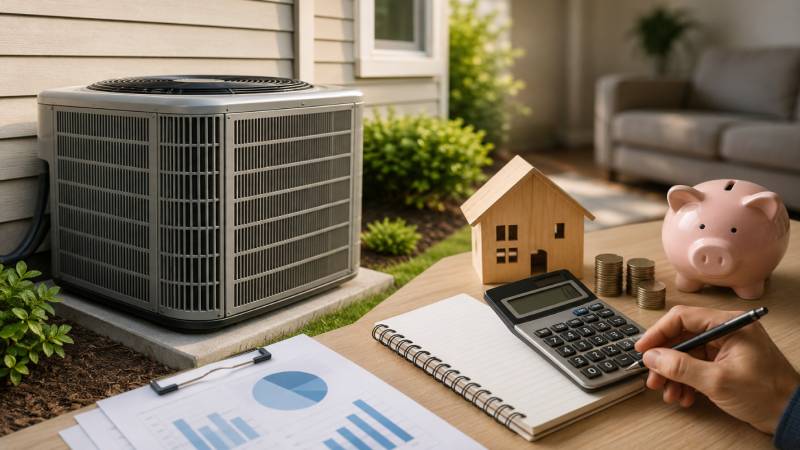
Furnaces do not pick a good time to die. Neither do air conditioners. Most homeowners find this out the hard way, usually during the first heat wave of summer or the first cold snap of the year, when the system just stops and the quotes start rolling in.
Few people keep several thousand dollars set aside for a full HVAC replacement. That gap between what a system costs and what most households have on hand is why hvac repair financing exists in the first place, and why so many homeowners end up researching it in a hurry.
Knowing your options ahead of time changes the whole experience. You get to compare offers with a clear head instead of signing whatever paperwork a technician hands you at 9pm on a Tuesday.
Why the Cost Feels So High
HVAC systems are complicated, and they tend to fail all at once rather than gradually.
A few things drive the price up:
- Full replacements commonly land somewhere between 5,000 and 12,000 dollars, depending on the size of the home and the equipment chosen
- Repairs on older units can snowball once a technician opens things up and finds two or three problems instead of one
- Emergency calls during extreme weather almost always cost more than a scheduled visit
- Ductwork changes, electrical work, or permits can add to the bill without warning
This is the point where hvac financing usually enters the conversation, since paying out of pocket is not realistic for most people.
The Main Ways Homeowners Finance a System
There is not one correct path here. What works depends on your credit, how fast you need the work done, and how much interest you are willing to pay.
Contractor and Manufacturer Financing
A lot of hvac installation financing gets arranged right through the contractor doing the job, or through the manufacturer whose equipment is being installed.
These programs usually offer a promotional window with no interest if the balance is cleared in time, set monthly payments spread across a fixed number of months or years, and approval that happens the same day, sometimes while the technician is still at the house.
Personal Loans
A personal loan from a bank or credit union is a simple route for someone who wants a fixed rate and does not want to involve their home as collateral.
This tends to make sense when funds are needed quickly, when your credit score already qualifies for a decent rate, or when you would rather keep the loan separate from the contractor entirely.
Home Equity Loans or a HELOC
Homeowners sitting on some equity sometimes go this route for bigger projects, including ac unit financing tied to a full central air replacement.
The tradeoff is straightforward. Rates are often lower, but your house is the collateral, and the approval process takes longer than contractor financing does.
Credit Cards
Cards are not usually the first choice, but they can work for a smaller repair or as a backup plan.
This mostly applies to minor fixes under a few hundred dollars, or to homeowners who know they can pay the balance off within a promotional zero percent window.
Utility and Government Programs
This one gets overlooked constantly. Some utility companies and local governments offer rebates or reduced rate financing for efficient HVAC upgrades.
It is worth a few minutes to check your utility provider’s website, your state energy office, and whether the new system qualifies for any federal tax credit.
Before You Sign Anything
A financing offer can look great on the surface and still cost more than expected once the details come out.
Read for these before committing:
- The actual interest rate once any promotional period ends
- Whether interest is deferred or fully waived if paid off on time
- The total amount you will repay over the life of the loan, not just the monthly figure
- Prepayment penalties, in case you want to pay it off early
- Late fees and what happens if a payment is missed
Credit Score and What It Changes
Your credit history shapes which options are actually available to you, not just which ones sound good.
Homeowners with strong credit tend to land zero percent or low rate promotional deals. Lower scores can still qualify for financing, just usually at a higher rate.
Contractor financing programs are often more flexible on credit range than a traditional bank loan, and checking your own credit report before applying takes the guesswork out of the process.
A Few Practical Tips
Get quotes from more than one contractor before picking a financing plan, since the equipment price and the financing terms are two separate negotiations.
Compare the total repayment amount rather than focusing only on the monthly payment. Ask directly whether promotional financing is available, because it is not always advertised upfront.
Read the loan agreement in full before signing, particularly the fine print about late fees.
Frequently Asked Questions
Is HVAC financing hard to qualify for?
Not usually. Homeowners with fair to good credit typically qualify for something. Terms vary enough between lenders that it is worth comparing a couple before deciding.
Can financing cover both a repair and a full system replacement?
Yes. Smaller jobs are often covered through hvac repair financing, while larger installations use separate installation financing plans, sometimes through the same lender.
Will financing a new AC unit hurt my credit score?
Applying triggers a credit check, which can cause a small, temporary dip. Paying on time afterward tends to help more than the initial check hurts.
Are the zero percent offers really interest free?
Only if the balance is paid off within the promotional period. If anything is left over after that window closes, interest often gets applied retroactively to the full amount.
What are my options if my credit is not great?
Financing is usually still possible, just at a higher interest rate. Many contractors work with several lenders, so it is worth asking rather than assuming you will not qualify. See more.