
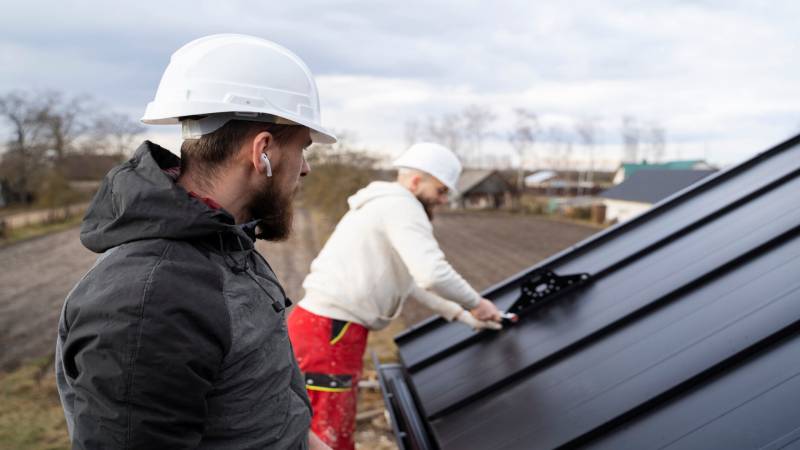
I can only tell this story to illustrate a point. A few years ago my neighbor waited 2 years longer than she needed to for a roof replacement. Each spring she would go around the outside of her house checking the roof for missing or damaged shingles. If she found any she would say to herself, “Oh well, I don’t need to replace the roof this year.” And then she would go around again the next year looking for missing or damaged shingles. And on. And on. 2 years later while sitting in her living room watching TV a water stain appeared for dinner-plate size area on her ceiling. I was shocked that it only took that long to develop a leak. She was also very upset when I told her that the cost to replace the roof would be much more than it would have been 2 years earlier. And the reason for that was that the decking underneath the shingles had rotted in the 2 years while she was hoping that the roof could wait.
My neighbor’s roof was a disaster. She waited two years longer than she should have. Every spring for two years she would take a stroll around the exterior of her house. She would take a look at the roof and declare that the roof could wait another year. Eventually the water would start to leak and there would be a large water stain coming down through the living room ceiling. It would be about the size of a dinner plate. By that time it would cost her a lot of money to replace the roof.
Signs That Indicate Something is Wrong with Your Roof
We also see roofs deteriorate over long periods of time and then fail. Unfortunately for most homeowners they only see the failure and are not aware of the deterioration that led to the failure prior to time of failure. Knowing the signs of failure before the damage occurs can save a homeowner thousands of dollars in repair costs.
Here are the signs of roof trouble that you should heed, and stop putting off the needed roof repair, before they become serious problems:
- Shingles that are curling at the edges or cupping in the middle (both are bad, and they mean different things about moisture exposure)
- Granules collecting in your gutters after rain, which looks like coarse dark sand and means the shingles are shedding their protective layer
- Daylight visible in the attic, even small pinpoints
- Sagging anywhere along the roofline, which is the one you call about immediately
A 20- to 25-year-old roof, no matter what it looks like from the street, should receive an inspection. Simply walking around the perimeter and making a visual inspection is NOT an inspection.
The decision factors most homeowners skip
In regards to deciding on the best material for your home, the material you choose for your roof is going to be the biggest deciding factor in your entire roofing process. When most homeowners are choosing a new roof for their home, they typically choose a material that is identical to the material that is currently on their home. This is because many homeowners are unaware that even though a certain material was on their home before, doesn’t mean that it is the best option for you in the future. In fact, the technology of roofing materials has come a long way in the last few decades, and there are many options that are far superior to the materials that were available previously.
| Material | Average lifespan | Relative cost | Best for |
| Asphalt (3-tab) | 15-20 years | Low | Budget-conscious projects |
| Architectural asphalt | 25-30 years | Moderate | Most residential roofs |
| Metal (standing seam) | 40-70 years | High | Long-term investment, low maintenance |
| Composite/synthetic | 30-50 years | Moderate-high | Aesthetic flexibility, durability |
Your home’s climate can greatly affect the type of roofing that you will need to make sure that it lasts for many years. Also, the type of ventilation that you will need to make sure that the air in your attic is not getting too hot and causing damage to your roof. If you live in an area that receives a lot of snow fall then you can expect to have ice dams form in your roof. This can cause a lot of damage to your home. There are many contractors in your local area that have many years of experience with installing roofs in your type of climate. It is also a good idea to search for a contractor that has many years of experience with the type of roofing that you are interested in having. A contractor from a national company who travels from 3 states away to do work in your home will not have the same knowledge of the type of roofing that you need as a contractor who is from your local area and has many years of experience with the type of roofing that you are interested in having.
Steps Involved in a Typical Roof Replacement Process for Homes
You need to start your planning for your roof replacement well before you start calling contractors to get price quotes for your work. When you do start calling for quotes you will have a list of possible contractors to call, and you can read through their web sites and check their reviews on-line before calling them. You also will know whether they pull permits for smaller projects that they complete so you won’t have to worry that they will cut corners to save some money for you so that they can complete the project faster.
- Get at least two quotes, and read them line by line. Are they including removal and disposal of old materials? What’s the warranty on labor versus materials?
- Verify the contractor is licensed and insured in your state. Ask for the certificate directly, not just a verbal confirmation.
- Ask explicitly what happens when they discover damaged decking underneath. Some contractors fold minor decking repair into the overall price; others charge per sheet of plywood replaced. Know this before anyone sets foot on your roof.
- Confirm the timeline and what “weather delay” actually means for your specific project schedule.
For homeowners in the mid-Atlantic region who are currently replacing a roof in Columbia MD, here are some Roof Replacement resources from HomeGenius Exteriors. These will provide you with a comprehensive guide to the process of a full roof replacement and give you a list of all of the questions to ask a contractor prior to signing a contract for a roof replacement.
Mistakes in planning a roof replacement
Don’t go with the lowest bid. Yes, you read that right. The lowest bid is not necessarily the best deal for you. I have seen several instances where a homeowner got the lowest bid and then the contractor would never return their calls to complete the job. The homeowner would have to hunt the contractor down to get the work completed. Sometimes the worst part is that the contractor would have been using cheaper materials to get the price down to that low bid. The cheaper materials may look good at first, but then you realize that they are not the same quality as the materials that you were originally quoted with. A slightly higher bid from a reputable contractor will save you a lot of headaches in the long run.
Getting the best price for the work is important. However, getting the work done at the best price is paramount. Remember that paying a little more for a contractor with excellent reviews for local roof replacement is better than getting the lowest bid from contractor who is unknown and may close up shop before completion of the work. (Check whether the contractor pulls permits, too. Some skip this to move faster. You’ll discover the problem when you try to sell the house.)
(When looking for a contractor to complete your roof replacement make sure that they pull the necessary permits. Many contractors will forgo pulling permits in order to complete the job on time but this is a huge risk. Once the roof work has been completed you will then be required to obtain the necessary inspections in order to receive your final clearance for your newly completed roof.
After the work is done
Maintenance on your newly installed roof is minimal. Remove all debris that has fallen into your roof’s valleys every fall prior to the first big wet snowfall. The leaves will become very heavy when wet and could cause damage to your roof. Also make sure to inspect the areas around your roof’s chimneys and skylights after any severe weather for any signs of damage to the flashings. These are the weakest points of your roof and will typically fail long before any signs of wear on the shingles.
A properly installed roof is a decades long item that needs very little maintenance. Clear the roof valleys of leaves in the fall. Check the flashings around your skylights and chimneys after severe weather for signs of leaks and make the repairs before the situation gets out of hand and allow water to enter your home by way of water stains on your ceilings. The work to make these repairs is trivial but can cause great problems if not addressed long before they become visible on the surface of your roof. See more.