
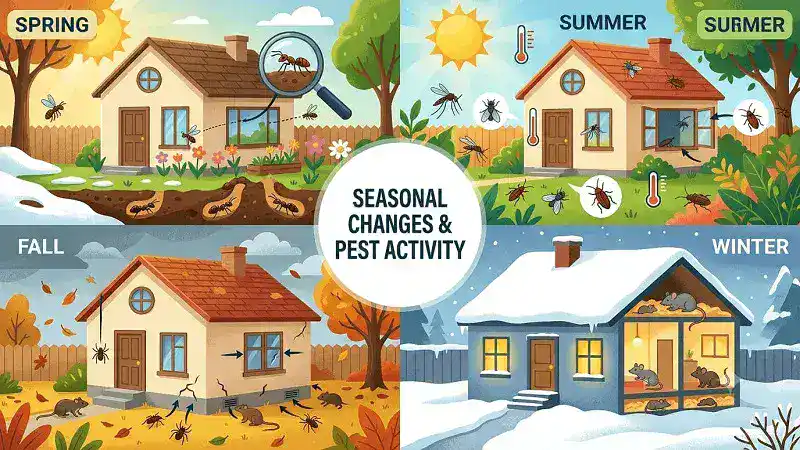
Pest activity is never random. It changes with temperature, humidity, and food availability throughout the year. Homes become part of this cycle because they offer stable shelter when outdoor conditions shift.
Understanding seasonal pest behavior helps homeowners predict when infestations are most likely and take action before problems escalate.
Understanding Seasonal Pest Patterns
Seasonal shifts influence how pests survive, reproduce, and migrate. Warm months increase breeding, while cold months force pests indoors.
Seasonal pest behavior is driven by survival instincts rather than chance. Insects and rodents follow environmental cues to find food, water, and shelter.
Spring Activity Surge
Spring marks the beginning of pest reactivation after winter dormancy. Rising temperatures and moisture create ideal breeding conditions.
During this time, ants, termites, and flies become more active as they rebuild colonies.
Spring pest prevention becomes important because early colony growth is easier to control than established infestations.
Summer Insect Expansion
Hot and humid conditions accelerate pest reproduction cycles. This leads to peak activity across most insect species.
Mosquitoes, cockroaches, and ants thrive in summer due to increased food availability and heat-driven metabolism.
Summer insect control is often required as pests expand rapidly in both outdoor and indoor environments.
Fall Migration Into Homes
As temperatures begin to drop, pests start moving closer to human shelters. This is one of the most critical transition periods of the year.
Cracks, vents, and unsealed openings become entry points for rodents and insects.
Terminix Pest Control helps identify weak areas in the home before pests settle indoors for winter.
Do You Know?
Rodents can squeeze through openings as small as a dime, which is why even minor structural gaps become major entry points during seasonal transitions.
Winter Rodent Activity Indoors
Winter forces many pests to seek warmth and food inside homes. Rodents are especially active during this season.
Winter rodent activity increases as outdoor resources decline, pushing mice and rats into attics, basements, and wall cavities.
Seasonal Pest Comparison
Different pests become active at different times of the year, and understanding their patterns can help you stay ahead.
| Season | Pest Behavior | Primary Risk | Home Impact |
| Spring | Nest building and emergence | Colony expansion | Foundation intrusion |
| Summer | Rapid breeding | High population growth | Indoor infestation spikes |
| Fall | Shelter seeking | Indoor migration | Entry point usage |
| Winter | Survival nesting | Rodent movement indoors | Hidden structural nesting |
Pro Tip: Store outdoor firewood away from exterior walls. This reduces hiding spaces for termites and rodents near structural foundations.
Prevention Across All Seasons
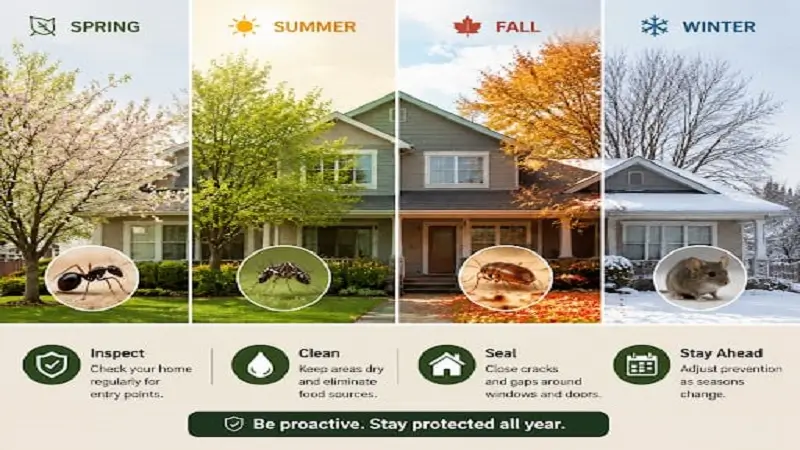
Preventive steps must adjust as seasons change. However, consistency is more important than timing alone.
Routine inspections, moisture control, and sealing entry points reduce pest pressure year-round.
Seasonal pest behavior shows that prevention is most effective when done before pests become visible inside the home.
Quick Fact: According to the U.S. Environmental Protection Agency (EPA), climate conditions directly influence pest reproduction cycles and migration patterns.
Key Takeaways
- Pest activity changes with seasonal environmental shifts
- Seasonal pest behavior determines when pests enter homes
- Spring and summer drive reproduction and expansion
- Fall and winter increase indoor migration risks
- Preventive maintenance is more effective than reactive control
Note: Even small food spills or moisture leaks can attract pests within hours during warm months, making cleanliness a critical defense layer.
Endnote:
Pests follow predictable environmental patterns. Once homeowners understand these cycles, they can reduce infestations significantly.
Ignoring seasonal pest behavior often leads to repeated infestations year after year, especially during transitional seasons.
Applying spring pest prevention early in the year reduces long-term pest pressure and minimizes structural risk.
FAQs
Why do pests change with the seasons?
Pests respond to temperature and food availability changes, which affect survival and reproduction.
Which season has the most pests?
Summer typically has the highest insect activity due to heat and humidity.
How do I control pests in winter?
Seal entry points and reduce indoor food access to limit winter rodent activity.
What should be checked in the fall?
Entry points, insulation gaps, and moisture areas should be reviewed using a fall pest checklist.
Why do pests enter homes in spring?
They emerge from dormancy and search for food and nesting sites as temperatures rise.
Long-term pest protection depends on understanding seasonal patterns and early intervention. Resources like Pest Control provide structured insights into prevention strategies, including guidance on why termite control is important for protecting homes from seasonal structural risks. See more