
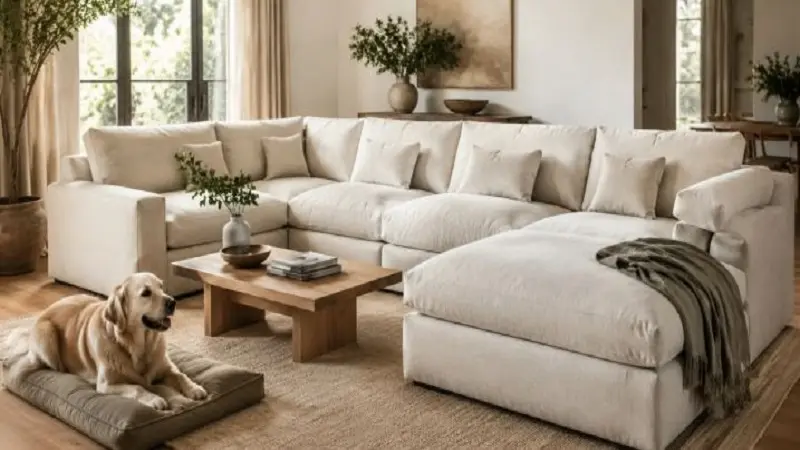
A sofa can feel generous in a showroom and still become awkward once it shares a room with children, pets, side tables, and daily traffic. The best choice gives people room to stretch without making cleanup or movement harder.
Start with the way the household actually sits. A curled-up reader, a tall adult, and a dog that claims one cushion all need a different balance of seat depth, back support, and usable floor area.
One useful reference is this deep seat couch, which combines a generous seat with movable cushions, scratch-resistant upholstery, splash resistance, and durable solid wood legs. Those features show why depth should be evaluated as part of a complete living system rather than as one number.
Define What Deep Seating Means in Your Home
Seat depth changes how the body rests. A deeper seat supports sideways lounging and legs-up relaxation, but shorter users may need a movable back cushion to keep their feet on the floor and their lower back supported.
Measure a sofa you already use, then record what feels missing. If everyone piles on extra pillows, more flexible back cushioning may matter more than another few inches of frame depth. If knees extend beyond the cushion during lounging, a deeper platform may be useful.
Map the Sofa Footprint Before Shopping
Use painter’s tape to mark the full sofa outline on the floor. Include the arms, not only the seating width, and leave the tape in place for a day so the household can walk around it during normal routines.
Keep the main path from the doorway to the seating area open. A comfortable sofa becomes frustrating when every trip across the room requires a sideways step. Check space for a coffee table, reclining feet, floor lamps, and pet beds at the same time.
Treat Adjustable Cushions as Fit Tools
Movable cushions can change the effective depth without changing the frame. Pulling a back cushion forward creates a more upright perch, while shifting it back gives a taller person or a napper more room.
Test each likely position rather than judging the sofa in its most photogenic arrangement. A cushion should stay supportive when placed forward, and it should not expose a hard edge when moved back. Flexible pieces only help when every position remains usable.
Read Fabric Claims With Care
Pet-friendly upholstery usually refers to a tighter weave, stronger surface, easier care, or some combination of the three. It does not mean claws, digging, stains, and moisture can never damage the material.
Look for precise language about scratch resistance, spill behavior, fiber content, and cleaning. The referenced model uses high-density, short-pile polyester fibers designed to resist scratching, wear, pilling, pet hair, and stains while remaining easy to clean. That combination makes durability concrete for homes where pets and people return to the same seats every day.
Plan for Spills Before They Happen
Splash resistance can buy time, but it is not permission to leave liquid on the surface. Keep an absorbent white cloth nearby, blot rather than rub, and follow the product’s care instructions before applying any cleaner.
Create one household rule: spills are handled when they occur. Fast attention reduces the chance that moisture reaches seams or cushion fill. Pet owners should also vacuum hair and grit regularly because small particles can abrade fabric during daily use.
Match Upholstery to Pet Behavior
A cat that occasionally walks across the seat creates a different risk from a dog that circles, digs, and launches from the same corner every day. Observe the preferred landing spots and compare them with seams, piping, and loose edges.
Place a washable throw on the favorite corner during the first weeks. The cover protects the highest-wear zone while the animal learns the new surface. Nail care and a nearby scratching post or dog bed remain part of the furniture plan.
Check the Support Under the Softness
Cloud-like cushions can feel inviting, yet the structure still needs to support repeated use. Sit in the center and near an edge, then check whether the three-layer foam recovers after pressure is removed, since shape recovery is part of long-term durability.
Inspect the frame and legs in the published specifications. The referenced model uses solid wood legs as a sturdy, durable foundation beneath the soft seating, while their natural grain keeps the base visually warm. Confirm the listed capacity for every seat instead of estimating from appearance.
Decide How the Sofa Will Handle Naps and Guests
A generous seat may work for an occasional nap or one overnight visitor without a separate pull-out mechanism. Test the usable flat area after removing or repositioning back cushions, and consider the sleeper’s height and preferred position.
Do not call a deep sofa a bed unless its dimensions and surface suit the person who will use it. Keep a thin mattress pad or washable cover for planned guests, and make sure the remaining cushions have a place to go overnight.
Balance Comfort With Visual Scale
Deep seating can look heavy when paired with bulky tables and tall storage on every side. Use slimmer occasional tables, visible floor around the legs, and lighting that does not crowd the arms.
Curved edges and neutral upholstery can soften the footprint, while a rug helps define the seating zone. The rug should extend under at least the front portion of the sofa so the large piece feels connected to the room rather than parked against a wall.
Use a Five-Minute Final Test
Before buying, check five points in order: taped floor area, sitting position, cushion flexibility, fabric care, and delivery access. Confirm door widths, turns, stairs, and elevator limits using the package dimensions, not only the assembled dimensions.
Choose the model that fits the household’s most common evening, not an imagined special occasion. When depth, cleanability, durability, pet habits, and circulation all work together, the sofa can feel relaxed without making the rest of the room work harder.
Review the First Month of Use
Set calendar notes for the first week and first month. Check whether back cushions keep their chosen positions, which seat receives the most pet traffic, and how often the household reaches for cleaning supplies or extra pillows.
Adjust the arrangement before a minor annoyance becomes the permanent routine. Rotate movable cushions when the care guide permits, relocate a side table that blocks circulation, and protect the highest-wear corner. Early observation helps the room adapt to the sofa instead of accepting avoidable friction. See more