
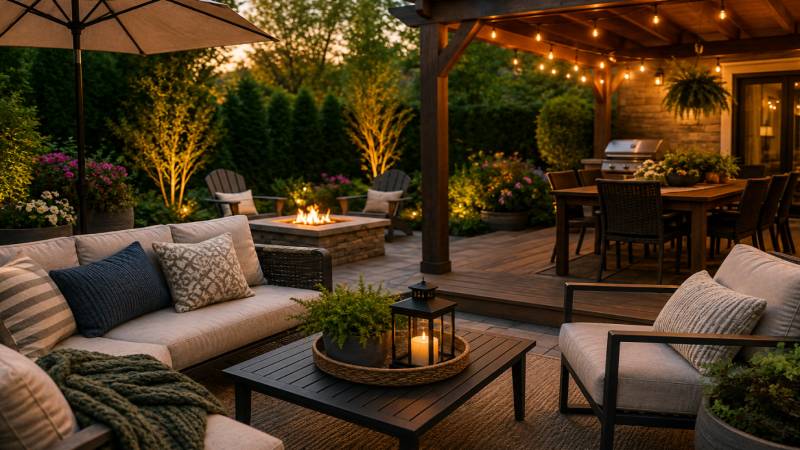
Backyards are only used as often as they feel comfortable sitting in. In cases where it’s sunny all day or the patio can be seen from a neighboring household’s windows, it is more likely that everyone remains indoors.
This guide inspects some practical solutions to making the yard a more comfortable area to relax in, as well as a couple of indoor adjustments.
Comfort is more important than it seems
People invest money into nice furniture and landscaping in their backyard but comfort will often come from simple aspects such as shade or privacy. The best patio set is worthless when it is hot to sit there by 2 PM.
Climate is an important factor that should not be forgotten about because what would work in Arizona might not have the same effect in Ohio or the Carolinas.
Shade Is the Starting Point
Shade is the single biggest factor in outdoor comfort. Without it, patios and decks can become unusable for hours at a time, especially during peak summer sun, even in relatively mild climates. It’s usually the first thing worth addressing.
Retractable Awnings
Retractable awnings are a popular fix because they don’t lock you into one setup. You can pull them out when the sun is harsh and retract them when you want more light.
A few reasons homeowners go this route:
- Patios and decks stay noticeably cooler underneath
- Less glare near sliding doors and big windows
- Furniture fades slower with less direct sun exposure
- You can adjust coverage depending on the season or time of day
- Many models come in manual or motorized versions
Compared to a fixed pergola, retractable awnings give more flexibility. On a mild spring day, you can just leave them open.
Best Spots for Retractable Awnings
They tend to work best over:
- Patios that face south or west
- Decks near the kitchen or main living area
- Outdoor dining spaces
- Areas around a pool
South and west facing spots usually get hit with the most afternoon sun, so that’s often where an awning makes the biggest difference.
What About Indoor Light and Privacy?
Outdoor comfort isn’t just about what’s happening outside. Large windows and sliding glass doors act like heat traps, letting in direct sunlight and glare for hours at a stretch — especially in rooms that open straight onto a patio. Over the course of a day, this can make indoor spaces feel almost as hot as the deck itself, undoing any shade or cooling you’ve added outside.
Room Darkening Window Shades
Room darkening window shades help cut down on that glare without blocking the room entirely. They’re especially useful in spaces that get strong afternoon light.
Some common places people use them:
- Living rooms with patio access
- Bedrooms on the east or west side of the house
- Home offices dealing with screen glare
- Media rooms that need better light control
They can also take some pressure off the air conditioning by keeping rooms from heating up as much during the day.
Arched Window Shutters
A lot of homes, especially Spanish style, Mediterranean, or craftsman builds, have arched windows that don’t fit standard blinds or shades. That’s where arched window shutters come in.
These are shaped to match the curve of the window instead of squaring it off with a straight panel. The window keeps its original shape, but you still get functional coverage.
What they typically offer:
- A custom fit for the curve of the window
- Adjustable slats for light and airflow
- More privacy without hiding the window’s shape
- A cleaner, more finished look from outside
They’re a good option for homes close to the street or near neighbors where privacy is more of a concern.
A Few Other Small Upgrades
Some additional things that help round out an outdoor space:
- Outdoor rated ceiling fans for covered patios
- Outdoor rugs to mark off a seating area
- Low voltage lighting for evenings
- Furniture covers built for wind, especially in coastal areas
- Screening for porches to keep bugs out
None of these are major projects, but they add up.
Things to Think About Before Buying
Before jumping into any of these upgrades, it helps to consider:
- How many hours of direct sun the space actually gets
- Wind conditions in your area, particularly for awnings
- The shape and size of your existing windows
- Whether you want motorized or manual options
- How much upkeep each product needs
Working these out ahead of time usually saves money and hassle later.
Frequently Asked Questions
Do retractable awnings hold up in windy conditions?
Many come with wind sensors that retract them automatically, or you can bring them in manually. If you live somewhere windy, look for a model rated for that.
Is there a difference between room darkening and blackout shades?
Yes. Room darkening shades block most light but let a little through. Blackout shades are meant to block nearly everything.
Will arched shutters fit any arched window?
Usually not off the shelf. Most arches vary slightly from house to house, so shutters are typically custom measured.
How much cooler does an awning actually make a patio?
It depends on the size and how far it extends, but many homeowners notice a real drop in surface temperature during peak sun hours.
Can I install these myself?
Awnings and arched shutters generally need professional installation to work properly and to keep any warranty valid. Some room darkening shades do come in DIY kits though. See more.