
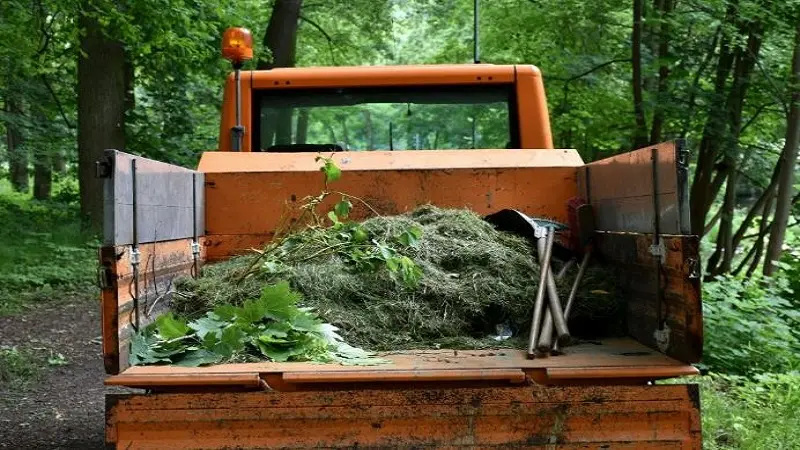
When you plan a landscaping project, you picture the finished thing. The new beds, the fresh paving, the lawn that finally looks the way you wanted, the space transformed into somewhere you actually want to spend time. What you almost never picture is the state the garden will be in halfway through, when the old turf is stacked in one corner, there’s a heap of broken paving by the fence, and the whole place looks less like a project and more like a small demolition site.
That mess is not a minor side effect. It’s one of the main things that turns a satisfying weekend project into a drawn-out slog, because garden work generates a surprising volume of waste and most people make no plan for it until it’s already in the way. The good news is that handling it well takes very little effort once you know what’s coming, and it’s the difference between a project that flows and one that grinds to a halt surrounded by its own debris. Here’s how to stay on top of the mess so it doesn’t take over.
Why Garden Projects Generate So Much
The first thing that catches people out is sheer volume. A garden project looks contained when you’re planning it, but the moment you start digging, lifting, and stripping things out, the waste multiplies alarmingly. Turf you lift off a lawn is heavy and takes up far more space than you’d guess. Soil you excavate for beds or foundations has to go somewhere, and displaced earth is dense and awkward. Old plants, hedge trimmings, branches, and general green matter pile up quickly and take up enormous room even before you add anything else.
Then there’s everything you’re removing to make way for the new, whether that’s old paving, a broken shed, tired decking, or a length of fence, plus all the packaging that comes with new materials and plants. Individually none of it seems like much. Collectively, a fairly modest garden makeover can produce more waste than a small house move, and it does so faster than you expect. Understanding this upfront is what stops you being blindsided partway through, standing in a garden you can no longer move around in, wondering how a bit of landscaping produced quite so much to get rid of.
Knowing Your Different Types of Waste
Not all of that waste is the same, and recognising the different streams helps you deal with each properly rather than lumping it all together. Green and organic matter is the most obvious, covering everything living or once living, from grass and weeds to prunings and old plants. This is often compostable or recyclable through green waste routes, so it’s worth keeping separate rather than mixing it in with everything else.
Soil and rubble form another category, being heavy and dense, and excavated earth in particular is deceptively weighty, which matters when it comes to disposal. Hard materials like old paving slabs, concrete, bricks, and stone are a stream of their own, frequently recoverable and reusable as aggregate if kept clean and apart. Then there’s general waste, the packaging, broken items, and mixed bits that don’t fall neatly into the other groups. Keeping these streams separated as you work makes disposal cheaper, easier, and far more likely to be recycled, since mixed loads are harder to process and more expensive to shift. A few designated piles or containers from the outset saves a great deal of sorting later.
Why the Mess Stalls the Whole Project
Beyond being unsightly, accumulated waste actively works against you, and this is the part people underestimate most. A garden mid-project has limited space, and as waste piles up it starts blocking the very areas you need to work in and move through. You find yourself shifting the same heap of rubble from one spot to another just to reach the thing you’re actually trying to do, which is wasted effort and a genuine drag on progress.
The mess causes damage too. Piles of soil, turf, or rubble left sitting on a lawn will kill the grass beneath within days, and heavy materials can mark or crack paving and paths. What was meant to be improved gets harmed by the debris of improving it. There’s a safety dimension as well, since a garden strewn with material, tools, and heaps of waste is easy to trip over or injure yourself on, especially when you’re carrying something. All of this adds up to a project that slows down and becomes more stressful precisely because the waste wasn’t dealt with. The mess doesn’t just sit there looking bad. It quietly halts the work.
Sorting Removal Before You Start Digging
The fix for all of this is simple and it happens before the project starts, not after. Arrange your waste removal in advance, so that from the very first day you have somewhere for the debris to go and it can leave as fast as you generate it. This single decision keeps the garden workable throughout, because instead of piles building up and getting in your way, material goes straight into disposal and the space stays clear for the actual work.
For most landscaping projects a skip is the sensible answer, since it handles the mixed heavy waste a garden job produces and sits on site so you can fill it as you go. Booking skip bin hire Sydney or the equivalent wherever you happen to be, and having it in place before you lift the first slab or strip the first bed, transforms how the project runs. You dig, you clear, and the waste is gone rather than accumulating into an obstacle. Size it for the volume you’re realistically expecting, remembering that garden waste is bulkier and heavier than it looks, and ask about how green waste and rubble are handled so as much as possible gets recovered rather than buried. Sorting this before you start is the least glamorous and most useful decision in the whole project.
Finishing With a Garden, Not a Waste Site
The reward for handling the mess well is that your project ends the way you imagined it, with a finished garden rather than a beautiful new feature surrounded by a lingering pile of debris you’ll be dealing with for weeks. Clearing as you go is the habit that gets you there, keeping the site tidy throughout rather than leaving one enormous cleanup for the end when your energy and enthusiasm have run out.
It’s worth keeping a few things back from disposal as you work. Usable materials like intact paving, good soil, or timber may serve another purpose in the garden or be worth passing on to someone who can use them, and compostable green matter can feed your own compost rather than being carted away. Everything genuinely spent goes into the skip promptly rather than being set aside in a temporary heap that turns permanent. Do it this way and the final day of your project is a genuine finish, a clean, transformed space you can step straight into and enjoy, rather than the anticlimax of standing among the wreckage wondering when you’ll find time to clear it. The mess is part of every landscaping job, but with a bit of planning it stays a passing phase rather than the thing you remember about the project. See more