
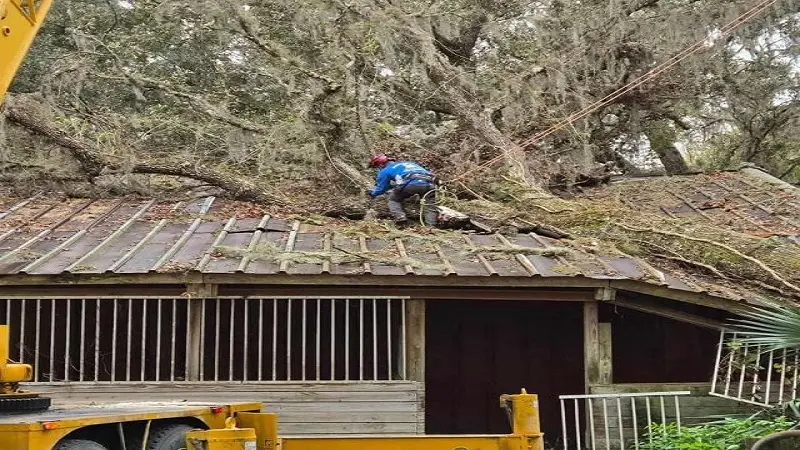
If you have weak trees in Spring Hill, FL, saturated sandy soil often loosens their roots. High winds easily push down overgrown or decaying species. As a result, heavy gusts push them onto nearby homes and property. You need to take quick steps to prevent accidents.
Read this guide to discover easy solutions for your yard. You will learn how to protect your family and home safely.
What Are the Risks of Having A Weak Tree During Hurricanes?
Hurricane winds constantly test local landscapes. Spring Hill faces strong storms almost every year. When fierce winds arrive, vulnerable trees quickly become dangerous projectiles.
Weak Branches Are More Likely to Break in Hurricane Winds
High winds hit full tree canopies like a sail. Fast-growing trees like Laurel Oaks have brittle wood. Because of this weak structure, large branches snap easily during storms. These heavy limbs often crash into power lines and roofs, causing thousands in repairs.
What Signs Indicate a Tree Is Structurally Weak?
You can spot structural trouble early if you look closely for key warning signs.
- Deep cracks in main trunk
- Hollow spots inside the wood
- Fungi growing near the base
- Sudden loss of green leaves
Decayed Trees Have a Higher Risk of Falling
Rot weakens the internal structure of mature trees. Water enters small wounds and breaks down wood fibers. Water Oak trees in Florida suffer from internal rot quite often. Over time, hollow trunks cannot support heavy tops, leading to total collapse in high winds.
Damaged Root Systems Can Lead to Tree Failure
Roots anchor your trees deep within the earth. However, local construction and trenching often sever these vital underground lines. Pine trees with cut roots lose stability fast. When rain saturates sandy soil, the entire root ball lifts and flips the tree over.
Leaning Trees Become More Unstable During Hurricanes
A slight tilt might seem harmless during calm weather. Yet, gravity constantly pulls on an off-center tree trunk. Storm winds push harder on the leaning side. This extra force snaps roots quickly, turning a minor lean into a total fall.
Diseased Trees Struggle to Withstand Extreme Weather
Diseases weaken a tree’s natural defenses over time. For instance, lethal bronzing attacks local Cabbage Palms rapidly. Infected trees lose their structural strength fast. Consequently, storm gusts snap these sick trees like toothpicks, spreading hazardous debris across your yard.
Can a Healthy-Looking Tree Still Be Hazardous?
Yes, trees can hide deep internal decay behind lush green leaves. Invisible root rot or hidden trunk hollows often cause sudden failure during severe Spring Hill storms.
Regular Inspections Help Identify Hurricane Risks Early
If you hire a professional tree service, they can spot hidden structural flaws before storms arrive. Their expert evaluations keep your yard safe every year.
- Schedule checks before June first
- Look for soft fungal growth
- Inspect root zones for lifting
- Examine crotches for deep splits
Falling Trees Can Damage Homes, Vehicles, and Power Lines
A falling tree causes massive structural damage instantly. Heavy trunks smash through roofs and crush parked cars easily. Furthermore, downed power lines create dangerous fires and leave whole neighborhoods without electricity. Taking action early prevents these costly disaster scenarios.
What to Do with Weak Trees Before Hurricanes for Safety?
Take quick action before storms hit your area. Preparing your trees early prevents severe damage to your property.
- Professional tree service: Hire a locally operated company in Spring Hill, FL, like Barto Stumps and Tree Service. Their experienced arborists can identify hidden dangers before storms arrive.
- Trim heavy branches: Prune weak branches from dense tree canopies. Thinning the canopy allows strong winds to pass through easily.
- Remove dead trees: Cut down fully dead or dying trees promptly. Removing them eliminates major fall hazards near your home.
- Clear yard debris: Clean up loose branches and yard trash today and this step prevents flying debris during sudden storm gusts.
- Install support cables: Anchor leaning trees with sturdy steel cables. Proper cabling adds essential support during high wind events.