
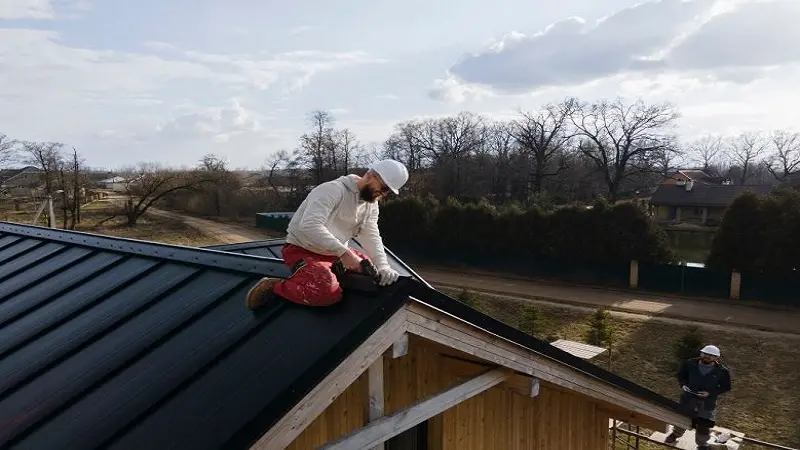
Arlington is one of Greater Boston’s most densely settled and architecturally varied inner suburbs — a town where Victorian two-families, triple-deckers, craftsman bungalows, and mid-century ranches sit side by side on streets that have been home to multiple generations of families. The housing stock reflects more than a century of construction, and the roofs on these homes carry the evidence of that history: original slate that has outlasted two generations of owners, asphalt shingles installed during various renovation cycles, flat roof sections on additions built in different decades with different materials. For homeowners in Arlington, finding a roofer who understands not just how to install shingles but how to work on the specific construction types and architectural details that characterize the town’s older homes is the difference between a roof replacement that holds up and one that creates problems within a few seasons.
What Arlington Homeowners Should Know About Hiring Roofers
Qualified roofers Arlington bring a set of capabilities specific to the local housing stock and climate that distinguishes them from contractors without experience in this market. Arlington’s older homes present roofing challenges that newer construction does not: irregular framing dimensions from pre-standard lumber sizing, original wood sheathing that may need assessment and partial replacement before new roofing goes on, slate or clay tile sections that require specialized expertise to repair or integrate with asphalt replacements, and the complex flashings that complex Victorian rooflines create at every valley, dormer, and chimney intersection. Contractors who have worked extensively on Arlington’s housing stock have encountered these conditions before and know how to address them; those who have not discover them at your expense.
The density of Arlington’s neighborhoods also creates practical project management considerations that affect how roofing work needs to be organized. Limited driveway access, neighboring properties within feet of the work zone, street parking restrictions for dumpsters and material deliveries, and noise ordinances that affect working hours all require planning and coordination that experienced Arlington contractors handle as a matter of routine. A contractor unfamiliar with the logistics of working in close-in suburban neighborhoods can create problems with neighbors, with permit compliance, and with material staging that add friction and cost to a project that could have run smoothly.
Ice Dams and Why They Are Such a Common Problem in Arlington
Ice dams are one of the most prevalent and most damaging roofing problems in Arlington’s older housing stock, and understanding how they form helps homeowners make better decisions about both roofing materials and the underlying causes that roofing alone cannot address. When heat escapes from the living space through the ceiling and attic — through inadequate insulation, air leaks at ceiling fixtures, or the structural thermal bridging common in older construction — it warms the roof deck and melts snow on the upper roof. That meltwater flows down the slope until it reaches the cold eave overhang, where it refreezes into a growing ridge of ice. Water backing up behind that ice ridge finds its way under shingles and flashings, into wall cavities, and eventually to ceilings and interior finishes. A roofing contractor who installs new shingles over ice and water shield at the eave helps manage the symptom; one who also identifies and recommends addressing the heat loss conditions that cause the ice dam helps solve the problem.
Roofing Materials That Perform on Arlington Homes
The roofing materials appropriate for Arlington homes reflect the town’s architectural diversity and the specific performance requirements of the New England climate. The options that experienced Arlington roofers most commonly work with include:
- Architectural asphalt shingles — the most widely installed roofing product on Arlington’s single-family and two-family homes, offering a good balance of durability, cost, and the dimensional appearance that suits the town’s varied architectural styles. Premium architectural products with enhanced impact resistance and extended warranty periods perform better than entry-level products in Massachusetts’s hail and ice conditions and are worth the incremental investment on homes where the roof will remain for twenty-plus years.
- Slate roofing — original slate is still present on many of Arlington’s older homes and can last a century or more when properly maintained. Repair of existing slate sections, replacement of cracked or slipped slates, and integration of slate sections with asphalt on combination roofs all require the specialized skills and tools that only contractors with genuine slate experience bring to the work. A contractor who proposes replacing original slate with asphalt without fully assessing the slate’s remaining condition may be recommending unnecessary expense.
- Metal roofing — standing seam and metal shingle products are increasingly specified on Arlington homes for their exceptional longevity — fifty years or more — and their resistance to the ice and wind conditions that reduce the effective lifespan of asphalt products in this climate. A premium upfront investment that eliminates the replacement cycle that asphalt requires every twenty to thirty years.
- Flat roof systems for additions and dormers — EPDM and TPO membrane systems for the flat and low-slope sections common on older Arlington homes with additions, dormers, and bay window roofs. These sections require different materials and installation expertise than steep-slope work and are a frequent source of leaks when they are maintained or replaced by contractors without flat roof experience.
- Cedar shake and shingle — still used on specific architectural applications in Arlington, particularly for decorative gable ends and dormers on Victorian and Craftsman homes where the visual character of natural wood is part of the building’s architectural identity. Requires experienced installation and regular maintenance to perform well in New England’s moisture conditions.
The Pre-Project Inspection That Separates Quality Roofers From the Rest
The quality of a roofing contractor’s pre-project inspection is one of the clearest signals available about the quality of the work that will follow. A thorough inspection of an Arlington home’s roof checks not just the visible surface condition but the condition of the sheathing, the adequacy of the existing ventilation, the state of all flashings at valleys, dormers, chimneys, skylights, and penetrations, and the gutter and drainage system’s ability to manage the water volume the roof sheds during heavy rain and snowmelt. This inspection is what allows the contractor to produce a proposal with confidence — specifying exactly what will be replaced, what conditions discovered during tear-off will be addressed, and how the finished installation will manage the moisture and ice conditions that Arlington’s climate imposes. A contractor who provides a roofing estimate after a brief walk-around without accessing the roof, without probing suspect areas, and without reviewing the attic from below is a contractor whose proposal is based on assumptions rather than assessment — and whose surprises tend to appear in the form of change orders after the project has started.
Permits and the Arlington Building Department
Roofing replacement in Arlington requires a building permit, administered through the town’s building department. The permit triggers an inspection that verifies the installation meets the Massachusetts Building Code requirements for ice and water shield application at eaves and valleys, ventilation, and flashing details — all of which are particularly relevant to the performance challenges that Arlington’s climate creates. A reputable roofer pulls the permit as a standard part of the project and welcomes the inspection as an independent quality check rather than treating it as an obstacle to be avoided. Unpermitted roofing work creates complications at resale that are disproportionately expensive to resolve — a fact that Arlington homeowners, in a real estate market where buyer due diligence is thorough and permit history is routinely reviewed, have good reason to take seriously.
Getting Accurate Roofing Estimates in Arlington
The roofing estimate process in Arlington produces the most useful results when it is approached with clearly defined expectations about what each proposal should contain. A professional roofing estimate specifies the exact shingle product or roofing system to be installed, the underlayment and ice and water shield specifications, the flashing materials and approach at every transition, whether sheathing replacement is included in the base scope or will be priced as a unit rate if discovered during tear-off, and how the project timeline accounts for the weather conditions that are a normal part of roofing work in Massachusetts. Proposals that lack this specificity leave room for substitutions and scope gaps that the homeowner discovers after the contract is signed. Comparing three detailed, specific proposals allows an Arlington homeowner to evaluate contractors on what they are actually committing to deliver — which is the comparison that matters. See more