
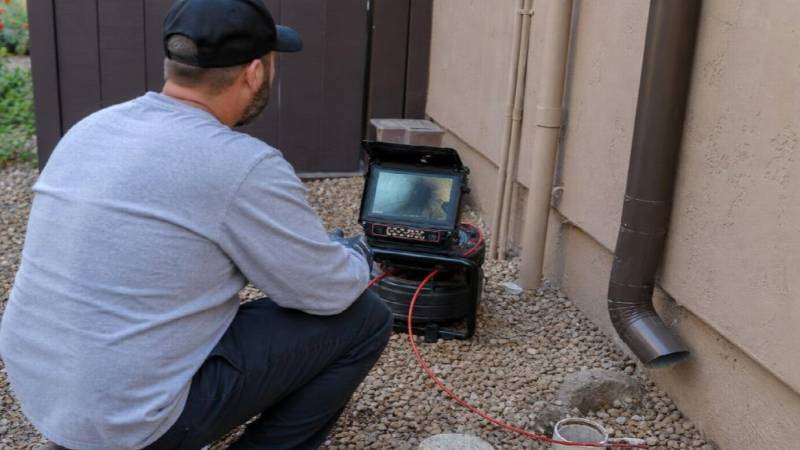
Your sewer line runs underground, out of sight and mostly out of mind. But in Phoenix Valley homes, especially older ones built on shifting caliche soil, what is happening beneath the surface can cause serious damage long before any symptom shows up inside the house. A sewer camera inspection is the only diagnostic method that lets a plumber see exactly what is inside the pipe. Penguin Air, Plumbing & Electrical, serving Phoenix homeowners since 2011, uses this technology to find problems no other tool can confirm.
The Diagnostic Gap Other Methods Leave Open
Does your drain clear up on its own, then back up again a week later? That cycle is one of the most frustrating plumbing problems Phoenix Valley homeowners face. A temporary fix rarely means the problem is gone. It usually means the real cause is still hiding inside the pipe wall.
A drain camera inspection from Penguin Air, Plumbing & Electrical sends a waterproof, fiber-optic camera through the cleanout access point, producing real-time video of the pipe interior. Cracks, root intrusion, collapsed sections, and offset joints all appear clearly on screen, and the camera head carries a radio transmitter so the technician can pinpoint the exact depth and location of any defect from the surface.
A drain snake clears a blockage but cannot reveal whether the pipe wall is cracked or shifted. A visual check from above grade shows nothing below the surface. Only the camera documents the actual pipe condition, turning a guess into a decision.
In Maricopa County, caliche hardpan soil shifts under homes and stresses buried sewer lines. Many older Phoenix neighborhoods still have clay tile or Orangeburg pipe from the 1950s and 1960s, and mesquite trees and oleander hedges common in desert yards push roots straight into pipe joints. Those conditions can stack simultaneously. A recorded camera diagnosis removes the guesswork before any repair decision is made.
Why Phoenix Plumbing Hides Problems Better Than Almost Anywhere Else
Buried sewer trouble in Phoenix often stays hidden for years. The desert climate, the soil, and the age of many neighborhoods all work together to mask damage until it becomes serious, which is exactly why a camera inspection gives homeowners a clear picture that surface symptoms simply cannot match.
Caliche Soil Shifts Pipes Without Warning
Caliche is a calcium carbonate hardpan layer found throughout Maricopa County. It does not absorb moisture evenly. After a monsoon storm or heavy irrigation, caliche expands and contracts in uneven patches, pushing buried sewer laterals sideways, the same hardpan that causes rock-like resistance in Valley trenching jobs just a foot or two down.
That lateral movement stresses pipe joints, causing separation or hairline cracks with no visible surface sign. A camera confirms whether a joint has shifted or cracked mid-barrel, because those two conditions call for different repairs: a separated joint may accept a trenchless liner, while a collapsed section usually requires spot excavation. That distinction directly affects repair cost.
Aging Pipe Materials in Older Phoenix Neighborhoods
Neighborhoods like Maryvale, Sunnyslope, and the Encanto district were built heavily during the 1950s through the 1970s, and many of those homes still have original clay tile or Orangeburg sewer pipe underground.
Clay tile joints separate under soil movement and invite roots. Orangeburg, a compressed tar-and-felt composite, softens over decades and eventually deforms or collapses inward. A homeowner cannot identify which material is in the ground without a camera. Pre-1980 homes across the Valley are strong candidates for an inspection, especially during escrow, when a documented video report protects buyers from inheriting a five-figure repair within Arizona’s standard buyer inspection period.
Desert Plants and Root Intrusion
Desert landscaping does not mean no root problems. Mesquite trees, oleander hedges, and fig trees common in older Phoenix yards send feeder roots toward any moisture source, including sewer pipe joints. During dry summer months, those roots hunt aggressively for moisture and nutrients leaking from cracked joints.
Root intrusion and grease buildup can look nearly identical from above grade, but they require different fixes: roots need mechanical rooter service, while grease and scale need hydro jetting. A camera is the only way to tell the difference and choose the correct treatment.
Schedule Before Small Problems Become Emergencies
The best time to inspect a sewer line is before it backs up into a shower pan at 6 a.m. Gurgling drains, slow flow across multiple fixtures, or sewage odor in the yard are early warning signs. Catching an offset joint or root mass early often means a targeted repair instead of a full line replacement.
Frequently Asked Questions
How Long Does a Sewer Camera Inspection Take?
A standard inspection on a single-family home typically takes 45 minutes to an hour. Larger homes or lines with multiple cleanout access points may run longer. The technician narrates findings in real time so the homeowner sees exactly what is inside the pipe.
Does the Inspection Require Digging Up the Yard?
No excavation is needed for the inspection itself. The camera enters through an existing cleanout access point, which most Maricopa County homes already have near the foundation or in the yard. If a problem is confirmed, trenchless repair methods can often fix it without major digging.
Can a Sewer Camera Detect a Slab Leak?
A sewer camera inspects drain and sewer lines only, not pressurized water supply lines running under the slab. Slab leak detection requires dedicated acoustic or electronic equipment. Warm floor spots or an unexplained jump in the water bill should be mentioned when scheduling so the right tool gets dispatched.
How Much Does a Sewer Camera Inspection Cost in Phoenix?
A standard residential sewer camera inspection in the Phoenix area generally runs between 150 and 300 dollars, depending on access difficulty, line length, and whether the scope is bundled with a cleaning or repair. A licensed plumber can provide a firm quote after reviewing the specific home’s layout and access points.
What Is the Difference Between a Camera Inspection and Hydro Jetting?
A camera inspection is a diagnostic tool that shows what is inside the pipe. Hydro jetting is a high-pressure water cleaning method that clears grease, scale, or root debris. Many Valley homeowners use both in sequence: the camera confirms the problem, and hydro jetting clears it.
About Penguin Air, Plumbing & Electrical
Penguin Air, Plumbing & Electrical is a Phoenix Valley home services company founded in 2011, offering HVAC, plumbing, and electrical services to residential and commercial customers across the Greater Phoenix Metro Area, including Mesa, Tempe, Glendale, Scottsdale, and Chandler. The company holds a BBB A+ Rating and has maintained BBB Accreditation since 2011. Its technicians work daily inside the caliche soil, aging clay and Orangeburg lines, and desert landscaping conditions described above. The office is located at 3710 East University Dr Suite 1, Phoenix, AZ 85034. See more.
Business Name: Penguin Air, Plumbing & Electrical
Address: 3710 E University Dr # 1, Phoenix, AZ 85034
Phone Number: (480) 525-5400
<iframe src=”https://www.google.com/maps/embed?pb=!1m18!1m12!1m3!1d3330.032773588283!2d-112.0015335!3d33.4223899!2m3!1f0!2f0!3f0!3m2!1i1024!2i768!4f13.1!3m3!1m2!1s0x872b0ee0168c3a39%3A0xbf0da35d2895aa6!2sPenguin%20Air%2C%20Plumbing%20%26%20Electrical!5e0!3m2!1sen!2sph!4v1782380273625!5m2!1sen!2sph” width=”600″ height=”450″ style=”border:0;” allowfullscreen=”” loading=”lazy” referrerpolicy=”strict-origin-when-cross-origin”></iframe>