
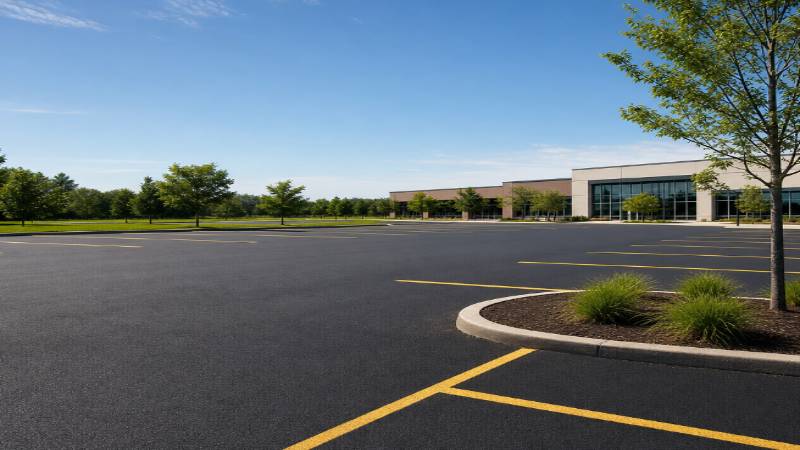
When most property owners think about curb appeal and facility upkeep, they focus on landscaping, building facades, or interior renovations. Yet one of the most overlooked aspects of commercial property management is what lies directly underfoot — the parking lot. Faded lines, crumbling asphalt, and poorly marked traffic lanes don’t just look neglected; they create genuine safety hazards, reduce property value, and expose business owners to liability. Understanding the full scope of parking lot maintenance, from surface integrity to precise line marking, is essential for any property manager who takes their investment seriously.
The Hidden Costs of Neglected Parking Surfaces
Asphalt is a durable material, but it is not indestructible. Exposure to UV radiation, freeze-thaw cycles, heavy vehicle traffic, and chemical spills gradually breaks down the binder that holds asphalt aggregate together. Once surface cracks appear, water infiltrates the base layers, accelerating deterioration at a rate that far outpaces the original surface wear. What begins as a minor crack can evolve into a pothole within a single winter season in climates like Denver’s, where temperature swings are dramatic and frequent.
The financial implications are significant. Reactive repairs — filling potholes after they form — cost considerably more per square foot than preventive treatments like sealcoating and crack filling. Beyond repair costs, a poorly maintained parking lot signals to customers and tenants that a business does not prioritize quality or safety. First impressions are formed before anyone walks through the front door, and a cracked, faded parking surface sets a negative tone immediately.
Liability and Compliance Considerations
Property owners have a legal duty of care to maintain safe conditions for visitors. Uneven pavement, missing directional markings, and improperly designated accessible parking spaces can all result in slip-and-fall claims or ADA compliance violations. The Americans with Disabilities Act sets specific requirements for accessible parking stall dimensions, signage, and surface conditions. Failing to meet these standards can result in costly fines and litigation that far exceed the price of routine maintenance.
Line Striping: More Than Just Paint on Pavement
Parking lot striping is often treated as an afterthought — something done once after a new lot is paved and then forgotten until the lines become nearly invisible. In reality, well-executed striping is a functional system that organizes traffic flow, maximizes the number of usable spaces, ensures pedestrian safety, and communicates critical information to drivers. The layout of stalls, fire lanes, crosswalks, loading zones, and accessible spaces must be carefully planned and precisely applied to serve all of these functions simultaneously.
Professional striping uses traffic-grade paint or thermoplastic materials that are formulated to withstand vehicle traffic, weather exposure, and cleaning chemicals. The difference between professional-grade materials and hardware store paint is dramatic in terms of longevity and visibility. High-quality striping remains crisp and legible for years rather than months, reducing the frequency and cost of restriping cycles.
When to Schedule a Restriping Project
Most parking lots benefit from restriping every one to two years, though high-traffic commercial properties may require more frequent attention. Key indicators that restriping is overdue include lines that are difficult to see in low-light conditions, faded accessible parking symbols, unclear directional arrows, and any recent sealcoating work that has covered existing markings. Restriping should always follow sealcoating, never precede it, since sealant will obscure fresh paint.
Denver’s Climate and Its Impact on Asphalt Longevity
Denver presents a uniquely challenging environment for asphalt surfaces. The city experiences over 300 days of sunshine annually, which accelerates oxidation and surface drying. At the same time, winter temperatures regularly drop below freezing, and the application of road salts and de-icing chemicals further degrades asphalt binders and painted markings. Spring snowmelt introduces significant moisture into pavement cracks, and the subsequent freeze-thaw cycle expands those cracks rapidly.
This climate reality makes a compelling case for working with local professionals who understand Denver’s specific conditions. A parking lot striping service in Denver that is familiar with local weather patterns, seasonal timing, and the right materials for high-altitude UV exposure will deliver results that last significantly longer than those applied by contractors without regional expertise. Scheduling striping and sealcoating during the optimal temperature windows — typically late spring through early fall — is critical for proper adhesion and curing.
Integrating Parking Lot Care Into a Broader Property Maintenance Strategy
Parking lot maintenance does not exist in isolation. It is one component of a comprehensive property care strategy that includes landscaping, drainage management, exterior lighting, and building upkeep. Just as homeowners invest in garden decor, outdoor living, and home care tips to maintain and enhance their residential spaces, commercial property owners must take a similarly holistic approach to their facilities. A well-striped, well-maintained parking lot complements attractive landscaping and a clean building exterior to create a cohesive, professional impression.
Drainage is a particularly important consideration. Poor drainage accelerates asphalt deterioration by allowing water to pool on the surface and seep into the base. Ensuring that parking lots have adequate slope, functional catch basins, and clear drainage paths is as important as the surface treatments applied on top. In some urban environments, innovative solutions like porous pavement are being explored to address both drainage and stormwater management challenges simultaneously.
Sustainable Pavement Solutions on the Horizon
The conversation around parking lot surfaces is evolving beyond simple maintenance. Cities and developers are increasingly exploring permeable and porous pavement systems that allow rainwater to filter through the surface rather than running off into storm drains. These systems reduce flooding risk, replenish groundwater, and decrease the burden on municipal stormwater infrastructure. According to reporting on NYC’s porous pavement and green infrastructure stormwater projects, cities are actively investing in these technologies as part of broader climate resilience strategies. While porous pavement requires different maintenance protocols than traditional asphalt, it represents a meaningful step toward more sustainable commercial property management.
About Asphalt Coatings Company
Asphalt Coatings Company has built a strong reputation throughout the Denver metro area by delivering reliable, high-quality pavement maintenance services to commercial and residential clients alike. Their team brings deep regional knowledge to every project, understanding how Denver’s climate demands specific material choices and precise application timing. From sealcoating and crack filling to comprehensive line striping programs, they approach each parking lot with the attention to detail that long-lasting results require. Their commitment to using professional-grade materials and proven techniques sets them apart in a market where shortcuts are common and quality is often sacrificed for speed.
Conclusion: Invest in your pavement before it costs you More
A well-maintained parking lot is not a luxury — it is a fundamental component of responsible property ownership. The costs of neglect compound quickly, from accelerating surface damage to legal liability and lost business. By investing in regular sealcoating, timely crack repair, and professional line striping, property owners protect their asphalt investment, enhance safety, and project a professional image to every visitor who pulls into their lot. In a competitive commercial environment, the condition of your parking surface speaks volumes before a single word is exchanged inside your building. Make sure it says the right things. See more: homenumental.com.