
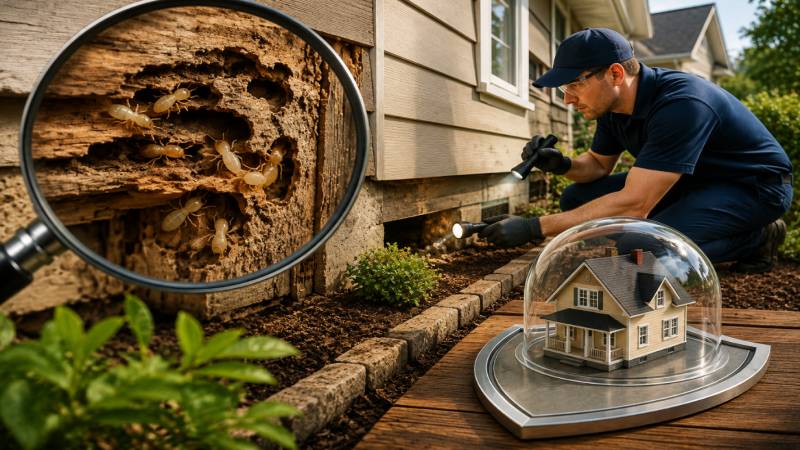
Termites can live inside a wall or a floor joist for years before anyone notices. Most homeowners don’t find out until there’s already a repair estimate in front of them, and by then the damage’s usually been going on way longer than it looks.
Ants scurry across the kitchen floor. Termites don’t do that. There’s no nest in the attic you can point to either. They just sit inside the wood and work, quietly, for a long time, and that’s really the whole problem. The damage is usually well underway before anyone sees a sign of it.
This guide gets into the warning signs, the parts of a home termites go after first, and what actually works, both for keeping them out and dealing with them once they’re already in.
Why the Damage Stays Hidden So Long?
Termites eat cellulose. Wood, paper, cardboard, some types of insulation too. They tunnel from the inside out, which is why a beam or wall stud can look totally normal on the outside while it’s hollow underneath.
Most people find this out the hard way. Sometimes during a renovation. Sometimes during a routine inspection before selling the house. Sometimes on some ordinary afternoon when a section of flooring suddenly feels a bit too soft underfoot.
Here’s a part that catches people off guard. Homeowners insurance almost never covers termite damage. Insurers treat it as a maintenance issue, not a sudden event like a fire or burst pipe, which basically means the entire repair cost lands on you, no matter how the infestation got started.
Signs You’re Dealing With Termite Infestation
Termite infestation doesn’t always come with loud warning signs. Some things worth checking for:
- Mud tubes along the foundation or through a crawl space
- Hollow or papery sounding wood when tapped
- Small holes with fine, dust like residue nearby
- Discarded wings near windows or doors once swarming season passes
- Paint that looks bubbled or sunken in spots
- Doors and windows that suddenly start sticking
None of these confirm anything by themselves. Two or three at once, though, that’s usually worth a closer look from someone who knows what they’re doing.
The Parts of a Home Termites Go After First
Conditions matter more than location here. Termites go wherever things work in their favor, and a few spots in a typical home end up more exposed than the rest.
Foundations and crawl spaces top the list, mostly because damp soil near the foundation is basically an open door. Small cracks in concrete, gaps around plumbing lines, that sort of thing gives termites a direct route into the wood framing above.
Support beams come next, the ones in basements, attics, crawl spaces. Get these compromised and it’s not a small deal anymore, it can affect the structural integrity of the entire house.
Window and door frames matter too, particularly ones that stay damp from condensation or poor sealing over the years.
And then there’s furniture. People really don’t expect this one. Drywood termites don’t need the structure of the house at all, they can live in furniture, wood trim, even picture frames, since soil contact isn’t something they need in the first place.
Drywood Termites Aren’t the Same as Subterranean Termites
Two different termites. Two pretty different approaches to treating them.
Subterranean termites live underground, build mud tubes to travel between colony and food source, and need constant moisture to survive. That’s usually why foundations and damp wood are the first places they show up.
Drywood termites are a different story. No soil contact needed at all. They live directly inside dry wood, whether furniture, framing, or flooring, and there’s no single obvious entry point to watch the way there is with subterranean colonies. The infestation itself can spread across several separate wood sections rather than one central nest.
That difference is exactly why drywood termite treatment often looks nothing like treating a subterranean colony. Treatment has to account for that kind of spread rather than one fixed location.
What Prevention Actually Looks Like?
Prevention costs way less than repair. Most of it comes down to a handful of habits, not one big fix.
Keeping firewood, mulch, and wood debris away from the foundation helps. So does fixing leaking pipes, gutters, or faucets that create excess moisture near the home. Crawl spaces need actual ventilation too, not just a vent cover that’s been collecting dust for years.
Beyond that:
- Seal cracks in the foundation and around utility entry points
- Skip direct wood to soil contact on decks, fences, porch steps
- Keep shrubs trimmed back from exterior walls
None of it takes much effort alone. Together, though, these habits remove most of what draws termites toward a home in the first place.
So When Should You Actually Call an Inspector
A yearly inspection is what most pest control pros recommend, even when nothing on the surface looks wrong.
Warmer, humid regions of the country, the Southeast or Gulf Coast for instance, tend to see more termite activity. Homes in those areas may need checks more often than the standard once a year visit.
There are situations that call for acting sooner rather than waiting:
- Buying or selling a home
- Spotting mud tubes or damaged wood during regular upkeep
- A property with a known history of termite activity
- A basement or crawl space that doesn’t get much airflow
- Discarded wings showing up indoors, particularly in spring or early summer
A licensed inspector can tell you exactly which species is involved and how far the damage’s spread. That’s what shapes the treatment plan from there.
What Termite Treatment Actually Involves?
The species involved, the size of the infestation, how much of the structure’s affected, treatment depends on all three.
Liquid termiticides get applied around the foundation, creating a barrier that kills termites on contact or as they pass through treated soil. Bait stations, on the other hand, sit in the ground around the property and work well for ongoing monitoring of subterranean colonies specifically.
For smaller, contained problems, localized wood treatment often does the job, basically direct injection or spot treatment of just the affected wood, no need to touch the rest of the structure.
Full fumigation comes into play for more serious drywood termite treatment cases, tenting the entire home to reach termites hiding across multiple areas at once. There’s also heat treatment, raising the internal temperature high enough that termites can’t survive it, which tends to work particularly well for drywood infestations limited to specific sections of a home.
Why Termite Removal Isn’t a DIY Job?
You can handle a good chunk of prevention yourself, sure. Actual termite removal, though, that’s a different story entirely.
Licensed professionals know how to correctly identify the species, track down hidden colonies that aren’t obvious from the surface, and match treatment to the specific property instead of just guessing. DIY treatment on a confirmed infestation usually only handles what’s visible on the surface, while the colony underneath keeps growing, mostly unnoticed the whole time. Real termite removal means getting rid of the actual source, not just the parts you happen to see. See more.
Frequently Asked Questions
How do I know if I have drywood termites or subterranean termites?
Subterranean termites tend to leave mud tubes near the foundation. Drywood termites leave small pellet like droppings near wood surfaces instead and don’t need soil contact to survive.
Can termite damage be repaired without replacing the whole structure?
Often, yes. Localized damage can usually be fixed by replacing just the affected section of wood, provided the infestation’s already been fully treated.
How long does drywood termite treatment usually take?
Depends on the method used. A localized treatment might only need a single visit, while fumigation typically means the home has to be vacated for two to three days.
Is it normal not to see termites even when they’re active in the home?
Yes, actually, more common than people think. Termites avoid light and open air, so an infestation can go unnoticed for a long time, especially inside walls or behind beams.
How often should homeowners get a termite inspection?
Once a year is the general rule, though homes in humid climates or with a history of termite activity should probably check more often than that.