
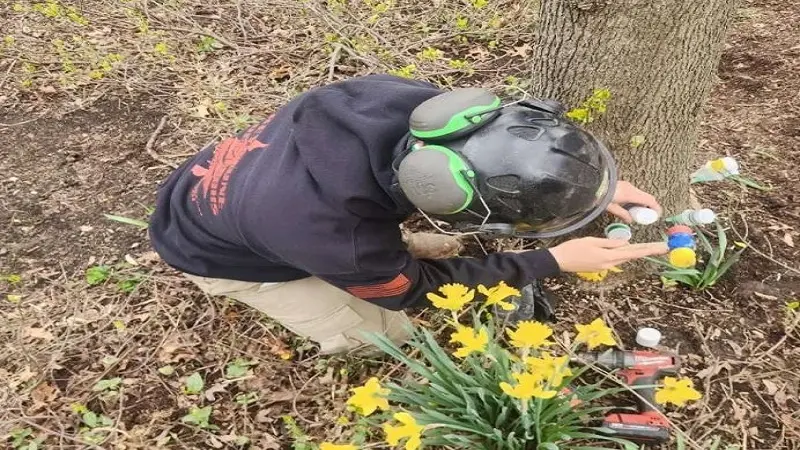
Oak Wilt, Anthracnose, Beech Leaf Disease, and Dutch Elm Disease are common in Pittsburgh and cause fast browning, thinning, and dieback. Western Pennsylvania’s humid summers and dense urban canopy drive these harmful fungi across local neighborhoods.
Read this guide to spot early symptoms, understand professional treatments, and protect your landscape’s health and beauty today.
What Are the Common Diseases that Affect Trees?
You may need to remove a tree if it becomes dead, diseased, or structurally unsafe. Heavy storms can crack weak trunks, while rot spreads quickly to nearby healthy growth.
Oak Wilt
This aggressive fungus blocks water flow in red oaks, causing rapid wilting and leaf drop within weeks. White oaks resist it better, but both species often die. Early treatment saves surrounding trees from root infection. Make sure to hire certified arborists for proper service. In Pittsburgh, you can rely on Keystone Tree Techs for proper diagnosis and solutions for your trees.
Can Oak Wilt Spread to Other Trees in Pittsburgh?
Yes, Oak Wilt spreads quickly through interconnected root systems. Nitidulid beetles also carry spores from infected oak bark to fresh wounds on healthy nearby trees during warm spring months.
Anthracnose
Anthracnose thrives during damp spring weather across Allegheny County. It causes dark spots, curled leaves, and early leaf drop on American Sycamore, Dogwood, and White Ash trees. Repeated outbreaks weaken branch structures over time.
Does Anthracnose Kill Trees Permanently?
Anthracnose rarely kills healthy mature trees outright. However, yearly defoliation stresses the tree, making it vulnerable to secondary pests, harsh winter freezes, and eventual structural decay.
Beech Leaf Disease
Caused by microscopic nematodes, this disease darkens leaf bands and thickens foliage. American Beech trees suffer severe canopy thinning, with young trees dying in three to five years without treatment.
How Fast Is Beech Leaf Disease Spreading in Pennsylvania?
Beech Leaf Disease spreads rapidly through birds, insects, and wind. First spotted locally in 2016, it now affects beech stands across western Pennsylvania, threatening regional forest health.
Dutch Elm Disease
Fungal spores spread by elm bark beetles block nutrient flow in American Elms. Foliage turns yellow and curls, leading to crown dieback. Without intervention, infected trees usually die within one season.
Are American Elms in Pittsburgh Fully Extinct?
No, mature native elms still survive in Pittsburgh parks. However, bark beetle infestations require constant vigilance and targeted injections to preserve these remaining canopy giants.
How Do Arborists Treat Tree Diseases?
Never compromise on care quality for your property. Hiring an expert ensures proper diagnosis, safe treatments, and long-term protection.
- Safe Removal: Highly diseased trees need careful extraction to protect surrounding growth.
- Targeted Fungicides: Arborists inject specialized chemical solutions directly into the trunk base. This action stops fungal growth effectively.
- Canopy Pruning: Removing dead branches improves airflow through infected crowns. Better air circulation reduces damp fungal moisture.
- Soil Injections: Deep soil fertilization boosts root health and natural defense systems. Stronger roots help trees fight off stress.
- Disinfecting Tools: Professionals sanitize cutting equipment between trees carefully. This clean habit stops disease transmission across properties. See more