
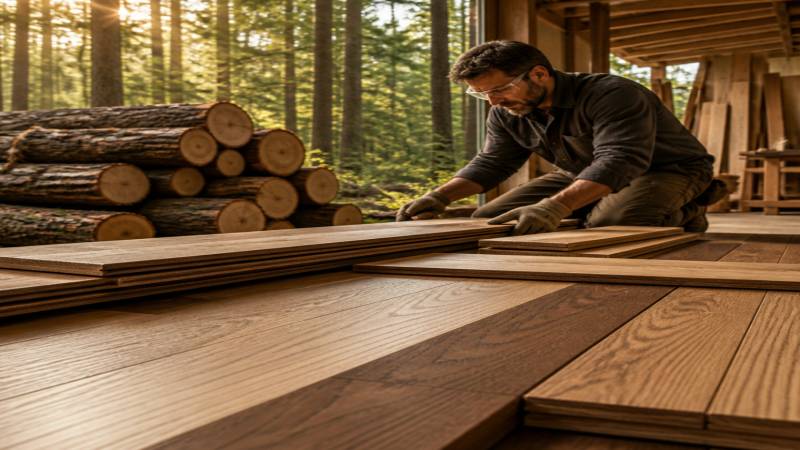
Every hardwood flooring project begins long before the first plank is laid. It starts with a decision that most homeowners overlook entirely — where the wood comes from and who supplies it. The quality of your lumber, the consistency of its grain, and the integrity of its milling all trace back to the source. Whether you are refinishing existing floors or installing brand-new hardwood throughout your home, understanding the supply chain behind your materials is one of the most important steps you can take toward a lasting, beautiful result.
Why Wood Quality Determines Project Longevity?
Hardwood flooring is one of the most durable investments a homeowner can make — but only when the wood itself meets a high standard. Low-grade lumber warps, cups, and splits under seasonal humidity changes. Poorly dried wood shrinks unpredictably after installation, leaving unsightly gaps between planks. These are not installation errors; they are material failures that begin at the mill or the supplier’s warehouse.
Premium hardwood is kiln-dried to precise moisture content levels, graded for structural integrity, and stored under controlled conditions before it ever reaches a job site. When you invest in quality materials from the start, you dramatically reduce the risk of callbacks, repairs, and premature refinishing. The floor you install today should still be performing beautifully two or three decades from now — and that timeline depends heavily on the wood you choose and the supplier you trust.
Moisture Content and Its Role in Floor Stability
One of the most technically critical factors in hardwood flooring is moisture content. Wood is a hygroscopic material, meaning it absorbs and releases moisture from the surrounding environment. When lumber is harvested and processed, it must be dried to a moisture content that aligns with the conditions of the space where it will be installed. In most interior environments across the United States, this target range falls between six and nine percent.
Reputable suppliers test and certify the moisture content of their stock before it ships. This is not a minor detail — it is the difference between a floor that performs flawlessly and one that buckles within its first year. Contractors who work with trusted suppliers can also acclimate wood properly on-site, allowing it to adjust to the home’s ambient humidity before installation begins.
Calculating Lumber Needs: Precision Prevents Waste
One of the most common and costly mistakes in hardwood flooring projects is inaccurate material estimation. Order too little, and you risk running short mid-installation — a serious problem if the batch is discontinued or the dye lot no longer matches. Order too much, and you are paying for lumber that sits unused in a garage. Accurate calculation is both a financial and logistical necessity.
For anyone planning a flooring project or a custom woodworking build, understanding how to properly measure and calculate your lumber requirements is essential. A reliable resource like this guide on how to calculate lumber for projects walks through the process in practical terms, covering board feet, waste factors, and how room geometry affects your final order. Applying these principles before you purchase ensures you arrive at the job site with exactly what you need — no more, no less.
Accounting for Waste and Cut Loss
Even the most experienced flooring installers build a waste factor into their material orders. For standard rectangular rooms, a seven to ten percent overage is typical. For rooms with diagonal installations, multiple doorways, or irregular shapes, that figure can climb to fifteen percent or higher. The species of wood also matters — wider planks tend to generate more waste at cuts than narrower strips. Planning for this reality upfront prevents the frustration of running short during installation.
Understanding Refinishing Costs and Scope
For homeowners with existing hardwood floors, refinishing is often a more cost-effective path than full replacement. However, the scope of a refinishing project — and its associated costs — can vary dramatically depending on the condition of the existing floor, the species of wood, the finish type selected, and the size of the space. Many homeowners are surprised to discover how many variables influence the final price.
If you are located in the Pacific Northwest and exploring your options, understanding what changes the scope of hardwood floor refinishing costs in Seattle, WA can help you budget accurately and avoid unexpected expenses. Factors like floor thickness, the number of sanding passes required, stain selection, and finish coats all contribute to the final figure. Getting a clear picture of these variables before work begins puts you in a much stronger position when evaluating contractor quotes.
When refinishing makes more sense than replacement?
A well-maintained hardwood floor can typically be sanded and refinished three to five times over its lifetime, depending on the thickness of the wear layer. If your floors are structurally sound but showing surface wear, scratches, or an outdated finish color, refinishing is almost always the smarter investment. It restores the floor’s appearance, extends its functional life, and costs a fraction of full replacement — especially when you factor in the cost of new materials, disposal of the old floor, and extended installation time.
Liberty Cedar: A Trusted Name in Premium Wood Supply
When it comes to sourcing hardwood for flooring, millwork, or custom projects, the supplier you choose sets the tone for everything that follows. Liberty Cedar has built a strong reputation in the wood supply industry by offering a carefully curated selection of domestic and imported hardwoods, backed by knowledgeable staff who understand the demands of both residential and commercial applications. Their commitment to quality control, consistent inventory, and customer service makes them a go-to resource for contractors and homeowners who refuse to compromise on materials.
Working with a supplier of this caliber means you are not simply buying lumber — you are gaining access to expertise. From species selection to finish compatibility, the right supplier helps you make informed decisions that protect your investment and elevate the final result of your project.
Bringing It All Together: A Thoughtful Approach to Hardwood Projects
Whether you are installing new hardwood floors, refinishing existing ones, or sourcing lumber for a custom woodworking build, the principles remain consistent: start with quality materials, plan your quantities carefully, understand the scope of the work ahead, and partner with suppliers and contractors who bring genuine expertise to the table.
Hardwood is a natural material with inherent character and variation. Respecting that character — through proper sourcing, accurate planning, and skilled installation — is what separates a floor that merely looks good on day one from one that becomes a defining feature of a home for generations. Take the time to do it right, and the results will speak for themselves long after the last coat of finish has dried.
Final Thoughts
The decisions made before a single board is cut or a sander is switched on determine the quality of the finished floor. From choosing the right supplier to calculating your lumber needs with precision and understanding the true scope of refinishing work, every step in the process matters. Invest in knowledge, invest in quality materials, and invest in the right partnerships — your floors will reward you for it. See more.