
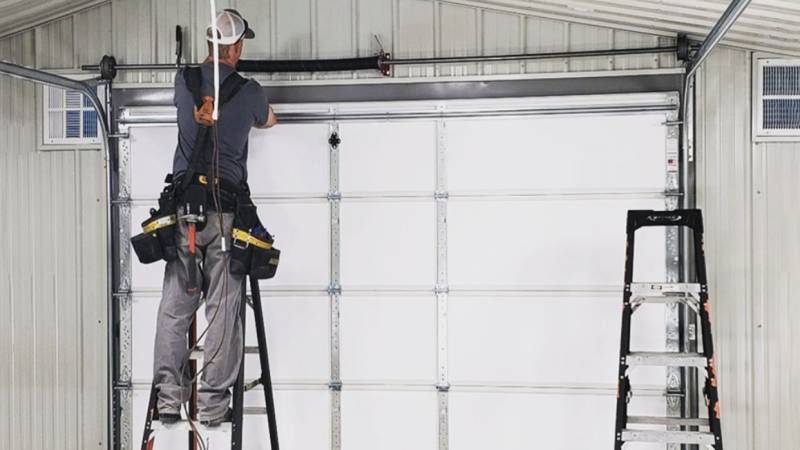
Your garage door is one of the most used moving parts of your home. Most people open and close it multiple times a day without a second thought. That’s exactly why small problems go unnoticed until they turn into bigger ones, sometimes right when you’re already late leaving the house.
Listen Before You Look
A healthy garage door runs quietly. If yours has started grinding, squealing, or banging during operation, something has changed. Worn rollers, loose hardware, or a track that’s shifted out of alignment all show up as noise before they show up as a full breakdown.
Don’t wait for the sound to go away on its own. It won’t. A noisy door today is usually a stuck or broken door within a few weeks.
Watch How the Door Moves
Disconnect the opener and lift the door halfway by hand. A properly balanced door stays in place. If it slides down or shoots up on its own, the springs are no longer doing their job correctly. This isn’t a small issue. An unbalanced door puts extra strain on the opener motor and can fail without warning.
Also watch for jerky movement, a door that stalls partway through its cycle, or one side that visibly lags behind the other. Any of these point to a mechanical issue that needs attention before you use the door again.
Check the Safety Features
Every modern garage door has a safety reversal system. Place a block of wood on the ground where the door closes. If the door doesn’t reverse immediately on contact, stop using it right away. This isn’t a convenience feature. It’s the system that keeps a closing door from hurting a person, a pet, or a parked car.
Test the photo eye sensors near the bottom of the tracks too. Wave your hand in front of them while the door is closing. It should stop and reverse. If it doesn’t, the sensors are misaligned or failing.
Know When to Call a Professional
Some fixes, like tightening loose hardware or replacing worn weatherstripping, are reasonable to handle yourself. Springs, cables, and anything involving the torsion system are not. These parts hold enormous tension and have caused serious injuries to homeowners who tried to service them without the right training or tools.
If you’re dealing with a door that won’t balance, a cable that’s frayed, or an opener that’s straining to lift the door, it’s time to bring in a garage door company that handles these repairs regularly. What looks like a simple adjustment often turns out to be a symptom of a bigger issue underneath.
For anything involving springs, cables, or a door that’s come off its track entirely, professional garage door repair is the safer and often faster route. A trained technician can diagnose the actual cause in minutes, rather than you working through a list of guesses over a weekend.
A Simple Maintenance Routine
Lubricate rollers, hinges, and tracks twice a year with a garage door specific lubricant, not general purpose oil.
Inspect cables and springs visually every few months for fraying, rust, or gaps in the coils.
Tighten the bolts on the tracks and brackets, since daily vibration loosens them over time.
Test the auto reverse safety feature monthly. It takes less than a minute and confirms a critical safety system is still working.
A garage door that’s properly maintained lasts longer and stays safer. Catching small issues early costs you far less, in time and money, than waiting for a full failure. See more.